
The Missing Pieces in the Road to Ending Biopiracy
By Eduardo Echeverri López and Mireia López-Sánchez Girbén
Volume 27, no. 2, Political Economy of Science
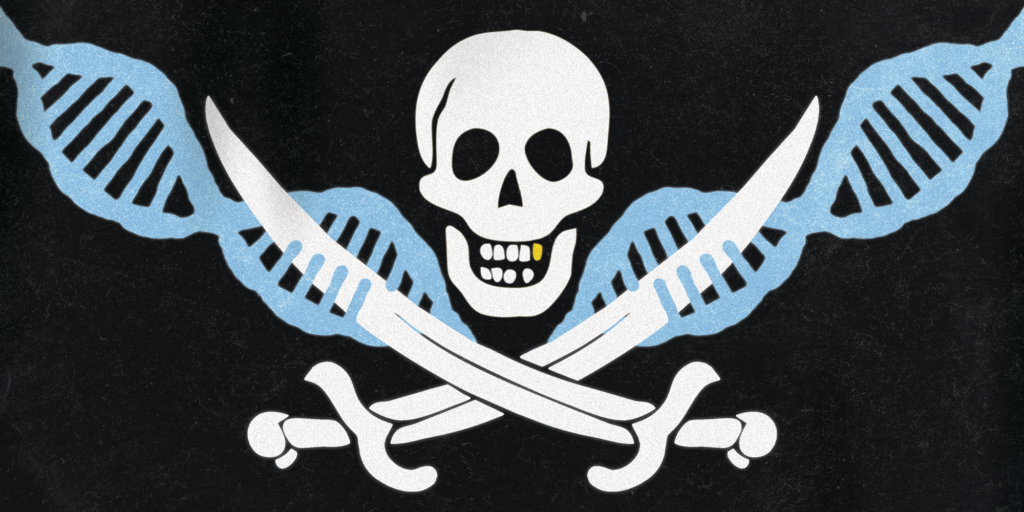
For decades, corporations and research institutions in the Global North have profited from biodiversity in the Global South without recognition, consent, or benefit-sharing. This practice, known as biopiracy, once meant the physical extraction of plants, seeds, and microorganisms in order to be patented and commercialized. Today, biopiracy has taken a new, less visible form. With genetic information increasingly stored in online databases, companies can access and use digital sequence information (DSI) without any obligation to consult the countries nor communities that produced the data. In response to this digital biopiracy, governments meeting at the 2024 United Nations Biodiversity Conference of the Parties to the UN Convention of Biological Diversity (COP16) in Cali, Colombia, established the Cali Fund, a global mechanism intended to redistribute a share of the benefits from DSI use to biodiversity-rich countries and Indigenous peoples. But because the fund relies only on voluntary corporate contributions, it risks normalizing the very injustice at the core of biopiracy—the extraction of genetic resources and knowledge from the Global South without consent nor compensation.
From Classic to Digital Piracy
During the twentieth century, pharmaceutical and agro-industrial laboratories massively patented pre-existing natural resources from developing countries.1 One emblematic case comes from Peru. For centuries, Quechua- and Aymará-speaking communities cultivated maca, a root revered in the Andes for its nutritional and medicinal value. In the early 2000s, the US pharmaceutical company PureWorld, Inc. obtained four patents on maca extracts and extraction techniques despite the fact that Andean communities had long practiced these methods. The company claimed applications for treating sexual dysfunction and even certain cancers. While the patents briefly cited Indigenous uses of maca in their background sections, this recognition was superficial; it did not involve consent, credit, nor benefit-sharing. Local communities fought to overturn the patents—not to claim royalties, but rather to return maca to their cultural domain.2 The pressure ultimately resulted in the creation of Peru’s National Commission Against Biopiracy (CNB), which by 2024 had successfully challenged 149 patents, at least two of them based on maca.3
Similar stories abound elsewhere. In the 1990s, the US chemical company W.R. Grace secured patents in Europe and the United States on methods of extracting neem oil for use in agricultural pesticides, as well as on the resulting substances, despite neem’s long-standing use by farmers in India. Activists, including prominent Indian physicist Vandana Shiva, denounced the case as an example of biopiracy, a term that gained global traction during the controversy. After years of campaigning, the European Patent Office (EPO) revoked one of the patents in 2000—the first time it withdrew a patent on the grounds of biopiracy.4 Like maca in Peru, the neem case revealed that the problem was not incidental but systemic—a transfer of wealth and knowledge from the Global South to the Global North.5
In 1992, the Convention on Biological Diversity (CBD), an international UN treaty, marked a milestone by recognizing state sovereignty over the genetic resources of all living beings other than humans. Sovereignty was defined by in situorigin, meaning that a coca plant grown in a botanical garden in the United Kingdom would still belong to the Andean country where the original sample came from.6
Despite difficulties in enforcement, the CBD and later agreements such as the Bonn Guidelines in 2002 and the Nagoya Protocol in 2010 gave Global South countries and local communities a legal basis from which to defend their rights as custodians of biodiversity and knowledge producers.
But biopiracy has evolved. While once it involved physically collecting seeds, plants, or knowledge, today it often happens through open-access databases such as the International Nucleotide Sequence Database Collaboration and China’s Genome Sequence Archive. Both commercial and non-commercial scientists create and upload DSI during their research. Following that, it can be further reused or converted into different data types and stored in both public and private databases.7 Over 1,700 database repositories are in routine use as sources of DSI for food and agriculture alone.8
These databases rarely require users to disclose origin or seek consent. For example, in agriculture, gene-edited soybeans resistant to herbicides are being developed with data from digital genomic sequences, allowing corporations to engineer crops without ever accessing the physical plant nor negotiating with the countries and communities that the crop originates from. DSI enables companies to bypass physical access, laws on genetic resources, and any relationship with communities altogether.9 What is extracted is invisible, but the harm remains. This new frontier of biopiracy is faster, cheaper, and harder to regulate.
Meanwhile, the CBD still treats genetic information as material, defining genetic resources only as physical samples that contain “functional units of heredity.”10 This narrow definition excludes intangible dimensions, such as DSI stored in databases, from access and benefit-sharing rules. As a result—and because there is no traceability nor control—it is difficult to estimate how widespread digital biopiracy is compared to “classic” biopiracy. It was not until the signing of the Nagoya Protocol as a supplement to the CBD that governments recognized the need to create “a global multilateral benefit-sharing mechanism to address the fair and equitable sharing of benefits derived from the utilization of genetic resources.”11
The Cali Fund: Historic Compromise or Corporate Mirage?
It was these debates about modern biopiracy that spurred the creation of the Cali Fund during COP16. The Fund aims to address digital biopiracy by encouraging companies to contribute to a global pool when they use DSI. Although the exact mechanism for distribution is not yet defined, the money is supposed to be directed toward the protection of nature in biodiversity-rich countries, with half allocated specifically to Indigenous peoples and local communities, recognizing their role as stewards of biodiversity. Companies heavily dependent on DSI—such as AstraZeneca, Bayer, or GSK—are being encouraged to contribute 1 percent of their profits or 0.1 percent of their revenues.12
But the mechanism is entirely voluntary. Recognition of the rights of Indigenous peoples and Global South countries is thus left to the goodwill of corporations in the Global North. This was no accident: While megabiodiverse countries in Africa and Latin America pushed for mandatory contributions, Northern states demanded looser mechanisms. NGOs and media reported that industry lobbyists were particularly active at COP16, pressuring negotiators to prevent the system from becoming binding.13
The Fund’s creators projected it could raise one billion dollars annually. Yet, five months after its launch, a report by Carbon Brief revealed that no company had contributed.14 The UK government invited large firms such as AstraZeneca to become early donors, but these corporations replied that they were “still evaluating participation,” despite the fact that AstraZeneca’s 2024 revenues of $54 billion would translate into a contribution of roughly $54 million under the Fund’s indicative rate. What was presented as a benefit-sharing system looks instead like a donation box—dependent, like most charity, on the goodwill of the powerful. Meanwhile, the United States, home to many of the world’s largest DSI users, has not even ratified the CBD.15
Supporters of the Cali Fund argue that companies will donate to burnish their ecological image, appealing to socially conscious consumers. But this framing replicates the same logic used in climate debates, where the burden of responsibility is shifted to individual consumers instead of systemic change. Philosopher Chris J. Cuomo reminds us that “an overemphasis on household and personal-sphere fossil fuel emissions distracts from attention to higher-level corporate and governmental responsibilities for addressing the problem of climate change.”16 The Cali Fund risks doing the same for biopiracy.
More troubling, the Fund lacks mechanisms to trace DSI back to its source, or even to ensure that communities know their data is being used. By 2024, Peru’s CNB had documented 406 cases of patents worldwide involving misappropriation of the country’s biological resources, including maca, the sangre de grado plant, and sacha inchi.17 Yet with no public mechanism to track which local resources have been sequenced and uploaded, it is currently impossible to know how many of these cases have already shifted into digital biopiracy, even if the patents themselves are challenged.
This vulnerability is compounded by domestic policies that privilege agribusiness and biotech while sidelining smallholder farmers and Indigenous knowledge systems. For instance, researcher Martha Isabel Gómez Lee points to Colombia’s National Agricultural Innovation System (SNIA), created in 2017 to guide agricultural research by prioritizing faster access to genetic resources and intellectual property protections. Indigenous communities argue that such frameworks open the door to further biopiracy. Even in Peru, where a strong system against biopiracy is in place, the number of cases recorded by the CNB rose by 91 percent between 2017 and 2018. Without enforceable rules or transparency, these patterns will persist, even with a fund in place.18
An Unfinished Road
Even when benefit-sharing agreements exist, they rarely alter underlying power dynamics. In South Africa, for instance, the Hoodia gordonii case is often cited as a landmark. The San people, who had long used the plant as an appetite suppressant, secured a benefit-sharing agreement that included an upfront payment of about $50,000 after their knowledge was patented for a weight-loss drug. Yet the deal brought limited material benefits as pharmaceutical development stalled and power remained concentrated within industry actors. Other high-profile cases in the country, such as those of rooibos tea and the Pelargonium sidoides plant, confirm the broader pattern that access and benefit-sharing mechanisms tend to recognize traditional knowledge symbolically while economic gains remain “disassociated from traditional knowledge holders and biodiversity custodians.”19
Ending biopiracy requires more than financial redistribution. It requires legal and epistemic justice, i.e., implementing prior informed consent, enforcing traceability for DSI, and ensuring that communities themselves govern access to their biodiversity and knowledge.20 It also means challenging the notion that scientific knowledge is neutral and universal. Biodiversity is not a raw material: it is embedded in cultures, territories, and ways of knowing.
Whether the Cali Fund becomes a stepping stone toward stronger protections or a corporate mirage remains to be seen. For now, it is voluntary, untraceable, and disconnected from specific harms. By itself, the Fund will not end digital biopiracy; it may instead normalize it.
—
Eduardo Echeverri López is a freelance journalist based in Colombia. He covers the intersections of environment, politics, and conflict, with a focus on Latin America. His work has appeared in outlets such as El Espectador, elDiario.es, and NACLA. He holds a postgraduate degree in Economics. Mireia López-Sánchez Girbén, MS(c) is a Spanish journalist specializing in international relations and human rights of migrants. She holds a degree in Journalism from the Complutense University of Madrid and is a Master’s candidate in the Analysis of Contemporary Political, Economic, and International Problems from the Externado University of Colombia.
More articles in Political Economy of Science will be posted over the next month. Subscribe/purchase this issue to read it today.
Notes
-
- Rachel Wynberg, “Biopiracy: Crying Wolf or a Lever for Equity and Conservation?,” Research Policy 52, no. 2 (2023).
- Amanda J. Landon, “Bioprospecting and Biopiracy in Latin America: The Case of Maca in Perú,” Nebraska Anthropologist 32 (2007): 63–73.
- Manuel Ruiz Muller, “Pasado, Presente y Futuro de la Comisión Nacional Contra la Biopratería del Perú” [Past, present, and future of the National Commission Against Biopiracy in Peru], Instituto Nacional de Defensa de la Competencia y de la Protección de la Propiedad Intelectual (INDECOPI), accessed September 29, 2025.
- “EPO Accepts Biopiracy Argument and Revokes Patent,” European Commission, accessed September 29, 2025.
- Anna Winterbottom, “Becoming ‘Traditional’: A Transnational History of Neem and Biopiracy Discourse,” Osiris 36, no. 1 (2021): 262–83.
- “Convention on Biological Diversity,” United Nations Environment Programme (UNEP), accessed August 15, 2025.
- “Mapping the Landscape of DSI Databases: A Large, Interconnected, and Ever Evolving DSI Data Ecosystem,” DSI Scientific Network, accessed September 29, 2025.
- Jack A. Heinemann, Dorien S. Coray, and David S. Thaler, “Exploratory Fact-finding Scoping Study on ‘Digital Sequence Information’ on Genetic Resources for Food and Agriculture,” Background Study Paper, no. 68 (November 2018).
- Martha Isabel Gómez Lee et al., “La COP 16 define al verdadero dueño de la biodiversidad en el Marco de “Información Digital sobre Secuencias de Recursos Genéticos (DSI)” [COP 16 defines the true owner of biodiversity in the framework for Digital Sequence Information (DSI)], Zero-Universidad Externado de Colombia, accessed August 15, 2025; “Digital Sequence Information on Genetic Resources: Concept, Scope and Current Use,” United Nations Environment Programme (UNEP), accessed August 28, 2025/
- “Convention on Biological Diversity,” United Nations Environment Programme (UNEP), accessed August 15, 2025, https://www.cbd.int/doc/legal/cbd-en.pdf
- “Nagoya Protocol on Access to Genetic Resources and the Fair and Equitable Sharing of Benefits Arising from their Utilization to the Convention on Biological Diversity,” (2011), Secretariat of the Convention on Biological Diversity United Nations Environmental Programme.
- Simon Mundy, “Pharma and Agritech Groups Push Against Biodiversity Levy at UN Summit,” Financial Times, October 29, 2024; “Decision Adopted by the Conference of the Parties to the Convention on Biological Diversity on 1 November 2024,” United Nations Environmental Programme, accessed August 14, 2025. For more information on the Cali Fund and biopiracy, see the following – “Secuencias Genéticas Digitales: Tema Clave Para el Convenio Sobre Diversidad Biológica” [Digital genetic sequences: a key issue for the Convention on Biological Diversity], BICSBAG: Construcción Internacional de Capacidades para la Evaluación y Gobernanza de la Biología Sintética, August 7, 2018; Ana María Bonet de Viola, “Regulación internacional de los recursos genéticos: Una genealogía crítica” [International regulation of genetic resources: a critical genealogy], Revista Facultad de Derecho, no. 48 (June 2020): 1–35; “Acceso y Participación en los Beneficios: Hojas Informativas en la Serie ABS” [Access and participation in benefits: factsheet in the ABS series], Convention on Biological Diversity (CDB), accessed August 16, 2025; Martha Isabel Gómez Lee et al., “Múltiples Horizontes: Gobernanza de Acceso a los Recursos Genéticos y Distribución de Beneficios; Aproximaciones Teórico-prácticas a la Noción de Gobernanza” [Multiple horizons: governance of access to genetic resources and benefit sharing; theoretical and practical approaches to the notion of governance], Cuadernos del CIPE, no. 36 (2016): 39–47; Christopher H. C. Lyal, “Digital Sequence Information on Genetic Resources and the Convention on Biological Diversity,” in Global Transformations in the Use of Biodiversity for Research and Development, ed. Chege Kamau (Gentium: Comparative Perspectives on Law and Justice, 2022), 589–619.
- César Giraldo Zuluaga, “Pese al Lobby de Compañías, se Aprobó Fondo Clave en el Último Tramo de la COP16” [Despite corporate lobbying, key funding is allowed in the final stretch of COP16], El Espectador, November 2, 2024.
- Orla Dwyer, “Revealed: ‘Cali Fund’ for Nature Still Empty as Emails Show Industry Hesitation,” Carbon Brief, August 6, 2025.
- “Country Profiles,” Country US, Convention on Biological Diversity, accessed September 29, 2025.
- Chris J. Cuomo, “Climate Change, Vulnerability, and Responsibility,” Hypatia 26, N.º 4, (Fall 2011): 690-714.
- Muller, “Pasado, Presente y Futuro.”
- Martha Isabel Gómez Lee, “Biopiratería: el Riesgo Olvidado por el Sistema Nacional de Innovación Agropecuaria (SNIA)” [Biopiracy: The risk forgotten by the National Agricultural Innovation System], Universidad Externado de Colombia, June 25, 2020.
- Wynberg, “Crying Wolf”
- Martha Isabel Gómez Lee, in discussion with the author, August 2025.