
Why Black People Die Sooner
By Joseph L. Graves, Jr.
Volume 27, no. 3, Public Health
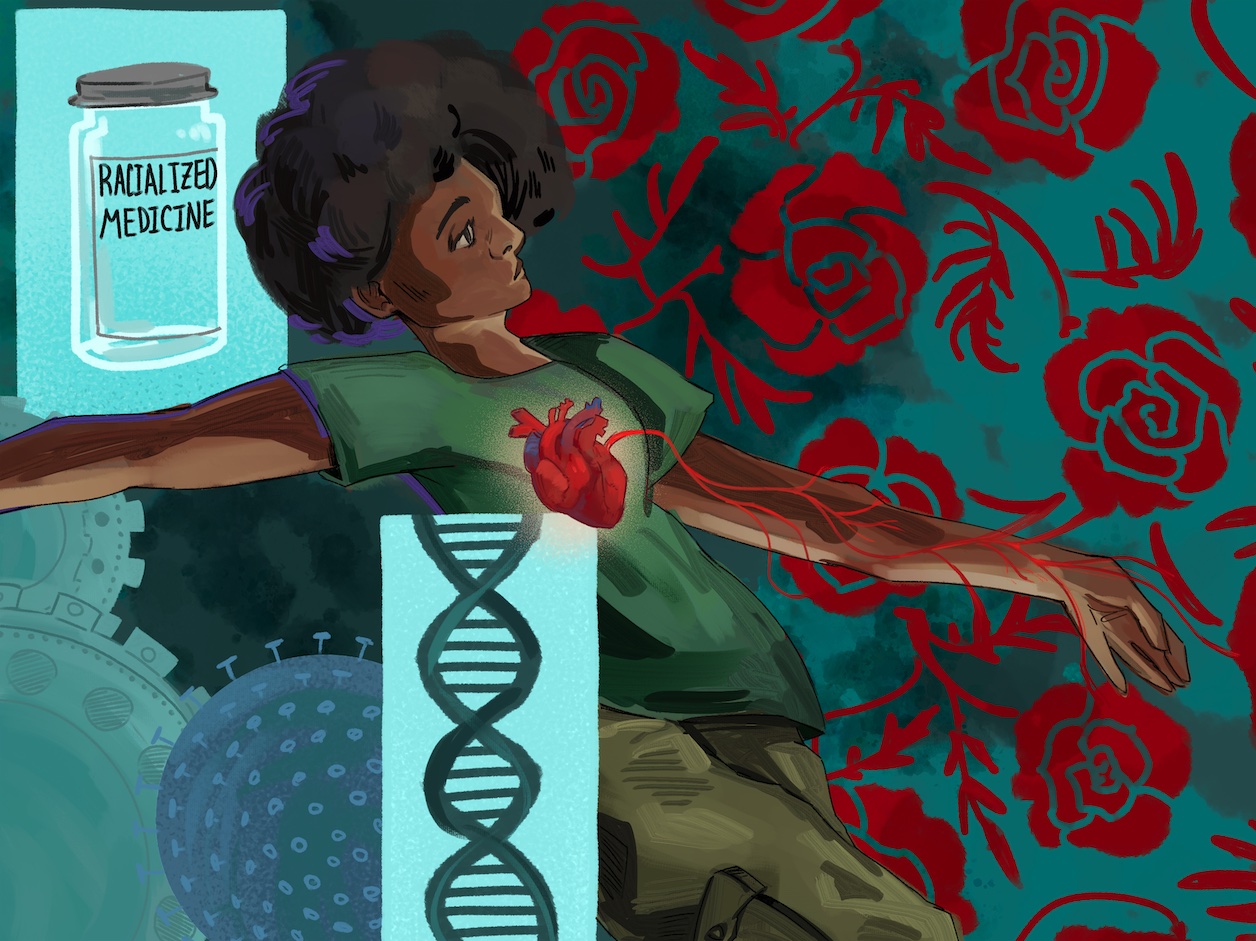
I decided to write Why Black People Die Sooner to put to rest the pervasive misconception that health and longevity disparities we observe in persons of African descent in the United States are caused by their genetic constitution. In short, these disparities are not the result of the action of natural selection or random chance (genetic drift) that acted to produce a supposed inferior African genome, but rather they are logical consequences of racial capitalism. Frederick Engels introduced us to the idea that epidemiology (defined as the understanding of the nature, extent, and cause of public health problems) is social.1 Indeed, Engels coined the term “social murder” in which he argued that if a society placed proletarians (working class people) in a position that resulted in their inevitably meeting a too early and an unnatural death, then that society is guilty of murder. In this regard, capitalism in the United States has been just as guilty of producing the unnatural and early deaths of its working and under class, but unlike England in the 19th century, this death has been differentially visited upon non-whites via structural racism. The impact of structural racism on the health of non-whites is a fact that has been generally ignored or minimized by both biomedical researchers and clinical practitioners throughout American history. It is hard to calculate how many non-white lives were prematurely ended due to structural racism. However, recent data show that over the last two decades, racialized medicine alone has resulted in an excess 1.6 million Black deaths, costing the nation 451 billion dollars in 2018 alone.2 In 2019, the age-adjusted death rate for Blacks and whites was 884 and 739 respectively per 100,000. In that same year, for three of the major causes of death, heart, cancer, and cerebrovascular disease the Black/white ratio was 1.3, 1.1, and 1.5 respectively.3
My Argument
My book, Why Black People Die Sooner, begins by explaining that the small genetic differences that exist between African and European Americans could not possibly explain the magnitude of the health and longevity disparities that have occurred in US society. The book does not provide the reader with a comprehensive explanation of the differences between biological and social conceptions of race (if you wish to learn about that, I refer you to my earlier works).4 Early on in my career, I came to the conclusion that for most of medicine’s history, it got race wrong. There were two primary reasons for this. First, the Western medical profession, like every other profession in our society, came into being within the context of unquestioned white supremacy across the globe. Because of this, it’s easy to see where the racist thinking of physicians such as Benjamin Rush (1746—1813), Samuel Cartwright (1793—1863), and Frank Tipton (1850—1893) came from. Second, the science that allowed a correct understanding of biological variation in nature did not come into existence until the early twentieth century. Specifically, this required the unification of the mechanisms of natural selection, genetic drift, and particulate inheritance. This was not fully worked out until the 1970s. Finally, a proper theory of how evolutionary biology was relevant to medical practice was not fully realized until the 1990s.5 However, not surprisingly, the pioneers in the field of evolutionary medicine did not fully recognize the role that social determinants of health played within this discipline (I was the first scholar to fully articulate how racism operated in this context).6
The book begins with an overview of how and why structural racism causes health injustice. I explain health and disease in an evolutionary context, detailing the ultimate causes including genetic causes, environmental factors, homeostasis, lack of maintenance, by-products of defense, stochastic developmental problems, and fitness conflicts between relatives. These causes interact with each other in specific diseases, and all are exacerbated by evolutionary mismatch. Evolutionary mismatch refers to how specific traits that may have been adaptive in ancestral environments become maladaptive in present environments. A well-established example of this is the human craving for high calorie and sweet foods which may have improved fitness for hunter-gatherers but contribute to obesity in societies with access to highly processed food in excess. Continued consumption of highly processed foods can lead to the dysregulation of glucose metabolism. This condition is defined as metabolic syndrome. This is both a disorder of homoeostasis and maintenance brought on by this specific environmental factor. It is defined by central obesity (based upon population-specific criteria) and any two of the following: raised triglycerides, reduced HDL cholesterol, raised blood pressure, and raised fasting plasma glucose or diagnosed diabetes.7 There are pronounced disparities in metabolic syndrome by ethnicity and socially defined race in Western societies, although the pattern differs per country. In 1960, 1.8 percent of the US population displayed type 2 diabetes, but by 2018–19 over 11 percent of the US population had type 2 diabetes.8 The prevalence of this disease in the most racially subordinated populations in the United States was almost twofold that of the socially dominant population.9 Again, we cannot explain these disparities by population-based polygenic risk, but differential exposure to environmental factors (discussed below) are more clearly linked to the disparities.
Of the ultimate causes, I discuss how none of these are capable of explaining the health disparities we observe in industrialized capitalist societies except the environment.10 The environments experienced by humans can be divided into both physical and social components (of course, these interact with each other). Physical components include exposure to pathogens and toxins, nutrition, green spaces, and noise/light pollution. Social components include dominance hierarchies organized around age, gender, class, sexual orientation, and socially defined race. Your social position is a powerful determinant of whether you will be exposed to pathogens and toxins, as well as whether you will experience noise/light pollution, have access to healthy food, access to proper medical care, and access to green space. Your social position will also determine how much stress you experience from social factors, such as undereducation, unemployment, exposure to physical violence (criminals or police), and incarceration. These interact to profoundly influence your likelihood of developing both acute and chronic disease.
The harm that racial medicine has caused and continues to cause, is another major theme of my book. Racial medicine is defined as biomedical research and clinical practice that operates from a racialist/racist perspective.11 In the second part of my book, I walk through examples of racial misconceptions associated with hypertension and cardiovascular disease, the microbiome, infectious disease, sickle cell anemia, cancer, the epigenome, and the ongoing misuse of race-based algorithms. One of the most egregious examples of ongoing racial misconceptions I discussed in this section involved a racialized explanation of SARS-CoV-2 transmission. Apologies, as the following discussion will get a little technical. However, the details are important for communicating how these apparent differences become misrepresented and reified. A study published in JAMA found a statistically different and higher expression of the transmembrane serial protease (TMPRSS2) gene in Black individuals compared with the other groups.12 This gene encodes a protein that is involved in activating other proteins, including viral glycoproteins. This is not surprising since previous studies had also found a higher expression of this gene in Black people. Of course, these prior studies had not actually used a scientifically accurate description of what combination of genetic ancestry defines one as “Black”, “Asian”, “Latino,” or “white”. However, the JAMA study did not find statistically significant differences in TMPRSS2 expression in the Asian, Latino, mixed, or white populations, but as a whole, these groups were statistically significantly different from the Black population.
We must ask the more fundamental question: what are the social costs and benefits of producing drugs that only the wealthy can afford to use?
This differential expression does not mean that Blacks were somehow more vulnerable to SARS-CoV-2 infection than the other groups. The question that this study did not address was exactly how much expression (how much TMPRSS2 protein on the surface of airway cells) was required to initiate successful entry of the virus into cells. The mean values reported in the paper for whites was 8.04 log2 counts per million and 8.64 log2 counts per million for Blacks. This measure is a way of normalizing raw counts to account for RNA sequencing depth. Taking the exponent of the log2 count results in the numbers of 3,102 for whites and 5,653 for Blacks. If this is an estimate of the receptors available for SARS-CoV-2 infection, these numbers are much higher than what is required to initiate and maintain cell-to-cell infection. For example, HIV-1 requires only 3.2 proviruses to spread from cell to cell. If the efficacy of SARS-Cov-2 infection is remotely similar to that of HIV-1, then the amount of the TMPRSS2 protein available on the surfaces of nasal airway cells for viral entry for all groups was greatly in excess of that required to cause infection. Indeed, studies of SARS-Cov-2 transmission illustrate that very little virus is required to successfully infect a cell.13 Therefore, there is no reason to believe that the differences in gene expression found in the study had any impact on the differential infection rate observed in Black and Brown people in New York during the early days of the pandemic. In fact, early figures from that time showed that Latinos displayed higher rates of infection than Blacks despite the lower gene expression found in the Latino sample. This is an example of the many ways that racialized data that is actually irrelevant to the biological phenomenon in question is used to buttress racial ideology in medicine.
The third section of the book then turns towards the question of how we can fix the problems in biomedical research and clinical practice related to anti-black racism. I discuss how precision medicine is overpromising its abilities, and the work that needs to be done to change the minds of medical practitioners. The new tools that are required to make precision medicine work face significant problems related to cost. For example, biologics are designed to target a specific molecule (such as a protein). However, the monthly cost of biologics can be in the range of thousands of dollars. In 2014, the annual costs of the monoclonal antibody drugs bevacizumab and cetuximab, used to treat advanced colon cancer, were estimated to range from $55,000 to $100,000 and from $80,000 to 100,000, respectively. On the other hand, some RNA-based therapies, such as those used to control hyperlipidemia, are an order of magnitude (ten times) less in cost. As sequencing and manufacturing technologies develop further, the costs of biologics may decline. Yet, the deployment of these medicines will still benefit those who have appropriate insurance coverage, who are still differentially wealthy and white. At present in the United States, these costs are covered by a combination of private insurance, Medicaid and Medicare, and grants from pharmaceutical companies (which are extremely limited). Because biologics target specific genotypes and protein receptors, they are difficult to store and maintain and are thus handled only by specialty pharmacies that can administer complex-molecule products. Access to such pharmacies is associated with socially defined race and class, with poor Black communities having fewer than wealthy non-Black communities. As many biologics are targeted at specific populations, they are often used in specialized clinics. The distribution of such clinics (e.g., those devoted to treating cystic fibrosis or sickle cell anemia) in the United States varies by socially defined race and class. Specialized clinics are likely to be situated in large hospitals in major cities; for example, clinics that treat severe combined immunodeficiency are found in New York, Los Angeles, Chicago, Houston, and Phoenix. The disparity in access to specialized clinics also contributes to the urban–rural divide in the quality of health care people receive. So, while no one should be opposed to finding more precise ways to fight disease, we must ask the more fundamental question: what are the social costs and benefits of producing drugs that only the wealthy can afford to use? This question is especially poignant when most of the racial health disparities we observe in our society can be fixed by basic social interventions, such as full employment, better education, and universal healthcare.14
In the conclusion, I propose a vision forward away from racial medicine and racism in medicine to help produce a world that we can all live well in. Of course, that world requires the dismantling of racism and capitalism as global systems. Some of you may argue that this is distant water for a near fire. However, there are steps that we can and must engage in today to bring about health justice, which will simultaneously buttress the case that capitalism is inherently incapable of delivering justice (of any form). In the conclusion of Racism, Not Race, Alan Goodman and I outlined changes in the US health system that we should be fighting for right now. These include adopting a plan of universal health coverage, expanding the licensing of physicians and physician assistants, and including in the training of these individuals a curriculum that explicitly addresses the significance of human biological variation and thereby dismantling racial misconceptions in medicine. Furthermore, I would argue that there is an immediate need to diversify the physician/physician assistant workforce by socially defined race. At present, Indigenous, Blacks, and Latinos only make up ~12.3 percent of the physician workforce, while representing > 35 percent of the US population.15 Studies have shown that racially subordinated people rate physician attributes more highly if that physician is a member of their socially defined race. Furthermore, they are also more likely to accept the recommendation for a required medical procedure if the physician is a member of their own racial group.16 It has also been shown that patient adherence to medication in racialized persons is higher when the patients trust their medical practitioner.17 Not surprisingly, African American patients trust African American doctors more than they trust European American physicians.
I have little faith that the Historically White Institutions (HWIs) are up to the task of diversifying the physician workforce. Therefore, I have argued that this must occur in Historically Black Colleges and Universities (HBCU), Minority Serving Institutions (MSIs), and Tribal Colleges. At present there are 204 medical schools, only 4 of which are HBCUs and none associated with a Tribal College. This results, in part, from the fact that many HBCUs are historically underfunded based upon laws that required their equal funding implemented during de jure segregation (Morrill Land Grant Act of 1890).18 My institution, North Carolina A&T State University is owed in excess of 2 billion dollars due to historic underfunding since 1930 alone. We must demand that HBCUs, MSIs, and Tribal Colleges be paid what they are owed immediately. Such an investment would allow them to develop their educational programs across the board, including the establishment of new medical schools to meet the need of a more diverse physician workforce.
The struggle to achieve the reforms that I have outlined above will also have the dual effect of raising the consciousness of Americans who are committed to a just society that the current socioeconomic system (capitalism) will not and cannot allow. It will also simultaneously lay bare the means by which this system engages in racialized social murder. This leaves us with the inescapable conclusion that health and social justice are inextricably linked, and that we must build a new society if we ever wish to live in a world where the color of your skin does not determine how long you will live.
—
Joseph L. Graves, Jr. received his Ph.D. in Environmental, Evolutionary and Systematic Biology from Wayne State University in 1988. In 1994 he was elected a Fellow of the Council of the American Association for the Advancement of Science (AAAS.) His recent honors include: “Genius Award” Liberty Science Center (May 2024) and Outstanding Alumnus Award (Public Service) Oberlin College (May 2024); Patrusky Lecture for Science Writers Conference (November 2024), W.W. Howells Award for best book in biological anthropology, presented by the American Association of Anthropologists (AAA), November 2024. @gravesjl55.bsky.social | https://www.linkedin.com/in/joseph-graves-jr-7746226a/
Notes
- Friedrich Engels, The Condition of the Working Class in England (1845; repr., North Charleston, SC: CreateSpace Independent Publishing Platform, 2018), 45.
- César Caraballo et al., “Excess Mortality and Years of Potential Life Lost Among the Black Population in the US, 1999-2020,” JAMA 329, no. 19 (May 2023): 1662–70, https://doi.org/10.1001/jama.2023.7022; “NIH-funded study highlights the financial toll of health disparities in the United States,” National Institutes of Health, May 16, 2023, https://www.nih.gov/news-events/news-releases/nih-funded-study-highlights-financial-toll-health-disparities-united-states.
- Jiaquan Xu et al., “Deaths: Final Data for 2019,” National Vital Statistics Reports 70, no. 8 (July 2021): 10, https://doi.org/10.15620/cdc:106058.
- Joseph L. Graves Jr., The Emperor’s New Clothes: Biological Theories of Race at the Millennium (New Brunswick: Rutgers University Press, 2003); Joseph L. Graves Jr. and Alan H. Goodman, Racism, Not Race: Answers to Frequently Asked Questions (New York: Columbia University Press, 2022).
- Randolph M. Nesse and George C. Williams, Why We Get Sick: The New Science of Darwinian Medicine (New York: Vintage Books, 1994); George C. Williams and Randolph M. Nesse, “The Dawn of Darwinian Medicine,” The Quarterly Review of Biology 66, no. 1 (March 1991): 1–22, https://doi.org/10.1086/417048.
- Joseph L. Graves Jr., “Evolutionary versus Racial Medicine: Why it Matters,” in Race and the Genetic Revolution: Science, Myth and Culture, ed. Sheldon Krimsky and Kathleen Sloan (New York: Columbia University Press, 2011), 142–70, https://doi.org/10.7312/columbia/9780231156974.003.0008.
- Jonathan C.K. Wells, The Metabolic Ghetto: An Evolutionary Perspective on Nutrition, Power Relations and Chronic Disease (Cambridge: Cambridge University Press, 2016), 37, table 2.2.
- Edward W. Gregg et al., “Trends in the Prevalence and Ratio of Diagnosed to Undiagnosed Diabetes According to Obesity Levels in the U.S.,” Diabetes Care 27, no. 12 (December 2004): 2806–12, https://doi.org/10.2337/diacare.27.12.2806; “National and State Diabetes Trends,” Centers for Disease Control and Prevention, CDC Archives, accessed April 25, 2026, https://archive.cdc.gov/www_cdc_gov/diabetes/library/reports/reportcard/national-state-diabetes-trends.html.
- Joseph L. Graves Jr., “Physiology,” in Anti-Racist Medicine: An Essential Guide to Advancing Equity in Medical Education, Research, Technology, Policy, and Practice, ed. Zeshan Qureshi, Mehrunisha Suleman, and Joseph L. Graves Jr. (Amsterdam: Elsevier, 2026).
- Paula Ivey Henry et al., “Embedded Racism: Inequitable Niche Construction as a Neglected Evolutionary Process Affecting Health,” Evolution, Medicine, and Public Health 11, no. 1 (April 2023), 112–25, https://doi.org/10.1093 (most read and Editor’s choice in 2023).
- Andrea Deyrup and Joseph L. Graves Jr., “Racial Biology and Medical Misconceptions,” The New England Journal of Medicine 386, no. 6 (February 2022): 501–3, https://doi.org/10.1056/NEJMp2116224.
- Supinda Bunyavanich, Chantal Grant, and Alfin Vicencio. “Racial/Ethnic Variation in Nasal Gene Expression of Transmembrane Serine Protease 2 (TMPRSS2),” JAMA 324, no. 15 (October 2020): 1567–68, https://doi.org/10.1001/jama.2020.17386.
- Olha Puhach, Benjamin Meyer, and Isabella Eckerle. “SARS-CoV-2 Viral Load and Shedding Kinetics,” Nature Reviews Microbiology 21 (2023): 147–61, https://doi.org/10.1038/s41579-022-00822-w; Patrick Sinclair et al., “The Airborne Transmission of Viruses Causes Tight Transmission Bottlenecks,” Nature Communications 15 (April 26, 2024): 3540, https://doi.org/10.1038/s41467-024-47923-z; Joseph L. Graves Jr., Why Black People Die Sooner: What Medicine Gets Wrong About Race and How to Fix It (New York: Columbia University Press, 2025), 224.
- Michele Evans et al., “Race in Medicine—Genetic Variation, Social Categories, and Paths to Health Equity,” The New England Journal of Medicine 385, no. 14 (September 2021), https://doi.org/10.1056/NEJMp2113749.
- Latoya Hill et al., “Physician Workforce Diversity by Race and Ethnicity,” KFF, Jul 22, 2025, https://www.kff.org/racial-equity-and-health-policy/physician-workforce-diversity-by-race-and-ethnicity/; Andis Robeznieks, “How Diversity’s Power Can Help Overcome The Physician Shortage,” American Medical Association, May 18, 2022, https://www.ama-assn.org/public-health/health-equity/how-diversity-s-power-can-help-overcome-physician-shortage.
- Somnath Saha and Mary Catherine Beach, “Impact of Physician Race on Patient Decision-Making and Ratings of Physicians: a Randomized Experiment Using Video Vignettes,” Journal of General Internal Medicine 35, no. 4 (April 2020): 1084–91. https://doi.org/10.1007/s11606-020-05646-z.
- Gregory L. Hall GL and Michele Heath, “Poor Medication Adherence in African Americans Is a Matter of Trust,” Journal of Racial and Ethnic Health Disparities 8, no 4 (August 2021): 927–42, https://doi.org/10.1007/s40615-020-00850-3; Kai Sun et al., “Racial Disparities in Medication Adherence between African American and Caucasian Patients With Systemic Lupus Erythematosus and Their Associated Factors,” ACR Open Rheumatology 2, no. 7 (June 25, 2020): 430-37, https://doi.org/10.1002/acr2.11160.
- Joseph L. Graves Jr., “The Field and Function of the Negro College in STEM 2025,” Integrative and Comparative Biology 65, no. 6 (June 2025): 1901–13, https://doi.org/10.1093/icb/icaf105; Joseph L. Graves Jr., “The Financial Shackling of Historically Black Universities in the United States,” Nature, March 6, 2025, https://www.nature.com/articles/d41586-025-00481-w.