

Public Health Against the State
Lessons from the Protest Epidemiologists of Nairobi’s Uprising
By Daniel Krugman
Volume 27, no. 3, Public Health
The police arrived at the mortuary late in the night. Let in by the attendants, they were led to the bodies. The previous evening, National Police Service (NPS) personnel had entered Githurai—one of Nairobi’s largest informal settlements—in the aftermath of another day of mass anti-government demonstrations rocking Kenya in early July 2024. As had become a frequent occurrence, multiple people from the neighborhood, some involved in the uprising, had been abducted then killed by the NPS. At the mortuary, a ritual then began. One by one, the bullets were carefully removed from the bodies and handed over to the authorities. The wounds were patched, the victims were cataloged, and the police left. No longer easily linkable to the protests or the violence, the next day the bodies were released to the community to be identified. They, like other murdered protesters, were officially counted by the Office of the Director of Public Prosecutions as unrelated casualties.1
This is how Magdalena, a lawyer representing a legal association in Nairobi, described a report from a community member in Githurai who called their protester rights hotline.2 She shared this story across a table from a hodgepodge group of public health professionals, lawyers, and community activists gathered to discuss a life-or-death question: how can the number of dead and injured be known when the institutions who usually create this knowledge are tied to the state doing the killing? For three weeks before this meeting, which participants called “the People’s Dossier,” thousands of Kenyans had taken to the streets to protest an International Monetary Fund (IMF)-sponsored austerity bill pushed by increasingly authoritarian president William Ruto.3 The mass movement was popularly named #RejectFinanceBill2024, and what followed over the next two years was the biggest and most violently suppressed anti-government protest in Kenyan history. A month into the uprising, the Kenya National Commission on Human Rights reported 50 dead, 413 wounded, and at least 59 people missing.4
But as Magdalena summarized bluntly, “Official counts cannot be trusted. These are sham numbers.” The group had come together to address this problem, and through it contemplated a much deeper question: what is the role of public health actors when the state is killing, maiming, and covering up atrocities? Public health tends to be an institutional enterprise—the domain of governments, nongovernmental organizations (NGOs), and universities. Its tools belong to the state; its experts answer to institutions. But for this group, the “apolitical” stance public health actors usually take during these moments was not enough. Rather than capitulating to the supposed impossibility of knowing the extent of state violence or being a part of the government’s cover up, they decided to use their training in public health for the anti-state movement.
For fifty-one days from June to August 2024, and again over the same months in 2025, groups of young public health workers in Nairobi did protest epidemiology: a mobilization of public health tools for the explicit advancement of mass uprising against the very state apparatus that usually controls the project of counting, managing, and intervening upon populations. While becoming a part of a long tradition of African health workers who use science and biomedicine to advance anti-colonial revolutions, they challenged popular conceptualizations of what public health is and how it should be done.
Public Health Workers in a Rebelling Kenya
On the morning of June 18, 2024, small protests broke out in Nairobi’s Central Business District. The dispute centered on an austerity bill prompted by the IMF: Kenya owed compliance with the terms of a $92 billion loan, and President Ruto’s government sought to raise funds through taxes on imports, taxes on essential goods including sanitary products, diapers, electronic devices, and higher taxes on bread. As the bill advanced through the National Assembly on June 20 despite continued street mobilization, the state’s treatment of protesters dramatically escalated. News media reported 200 protesters injured and two killed that day alone.5 Field clinics run by the volunteers featured here reported far more.
The combined outrage over state violence and the austerity bill culminated in what online activists called the “Seven Days of Rage” and a national strike on June 25. NPS then indiscriminately deployed nonlethal weaponry. Protesters swarmed the National Assembly. Hundreds were shot. Heavily armed soldiers entered the city streets after Ruto called in the Kenya Defence Forces (KDF). Chaos spread into the night, with covert abductions and intimidation operations concentrated in two of the city’s densest informal settlements, Githurai and Pipeline.6
Although Ruto announced he would not sign the bill the following day, the damage was done. Outrage over the thirteen officially reported deaths, the illegal KDF deployment, and mounting reports of kidnappings drove the organization of a “One Million People March” on June 27.7 Now demanding Ruto’s resignation and mass government overhaul, the June 27 protests were met with increased repression. This dynamic would continue for the next forty-five days. The Central Business District was occupied on Tuesdays and Thursdays throughout July. Public funerals for slain protesters led to mass demonstrations. Highways were barricaded almost daily. And in each event, unlawful arrests, abductions by unidentified state actors, tear gassing, invasion of private residences, and violence against health workers trying to aid protesters were reported to one or more of the organizations that would eventually gather around that table.8
While Ruto denounced the protesters and denied allegations of any state violence, two groups—Al-Ghaib Medical Policy (AMP) and Medics for Kenya (MFK)—organized young public health workers across the city to document the actual number of deceased and injured through the methods they were trained in.9
AMP was formed out of what its founder, Saif, described as spite toward a public health apparatus he had watched fail from the inside. Raised in Nairobi, he had worked for a vaccine distribution organization largely funded by foreign donors at a government hospital. There, he watched doctors degrade poor patients who came in with COVID-19 and witnessed hundreds of vaccines wasted after foreign consultants ignored local insight. AMP was his response. With LGBTQ rights activists and other former NGO workers who had similar experiences, they built an organization dedicated to what they considered to be real public health: making people healthier through changing material structures and liberating them from oppression, driven by evidence collected in ethical, community-centric ways. While committed to proven public health intervention and knowledge creation, they saw these methods as facilitators of the “collective quest for social justice and freedom” as one member described.
MFK was organized at the beginning of the 2024 protest period by doctors who wanted to take a stand against the government. Running free volunteer clinics around the city on major protest days, they treated anyone who came to receive care while they themselves withstood gunfire and tear gas.
Humanizing Data in Nairobi’s Informal Settlements
AMP’s first intervention was a “repository of violence” through citizen reporting on WhatsApp, X, and their social media channels. Within two weeks, a significant number of reports of events ignored by the state, public health authorities, or news media had come through. One person reported teargassing of a medical facility in the Central Business District while patients were waiting for care. Another outlined how a school was targeted and gassed with students inside. A number of reports detailed how pink gas was sprayed onto homes in informal settlements during and after protests, causing skin irritation, temporary visual impairment, chest tightness, wheezing, and difficulty breathing.
Focus group discussions organized at social justice centers across the city allowed AMP to collect qualitative data. These sessions were both data-gathering activities and spaces for protesters to give voice to what they were experiencing. But in contrast to many standard public health data collection activities, Saif did not stick strictly to research prompts. Treating the sessions as co-knowledge creation rather than extraction, he positioned himself as a protester, sharing his experiences of the previous days and offering his own conceptualizations of violence.
This strategy proved to be fruitful at one focus group held at a social justice center in Mathare—one of Nairobi’s most politically active informal settlements. Between walls covered in a mural of the 1980s Pan-Africanist revolutionary leader of Burkina Faso Thomas Sankara, painted quotes from revolutionary leaders, and a cardboard poster reading “KENYAN LIVES MATTER” followed by the names of people recently killed, these experienced protesters refused to talk simply about their experience of being gassed and abused by police. Rather, they centered the structural contingencies of the violence and their historical grounding. Linking the suppression of the #RejectFinanceBill2024 uprising to the long history of police violence in their slum, which they saw as “the training grounds” of Kenyan state violence, they collectively theorized how the events of the past few days were simply a scaling up of what they had gone through for years. Instead of the gassing, beatings and shootings being reserved to control a small section of the city as they had always done, they claimed that the government’s escalation was the unprecedented use of these tactics to quell a protest of unprecedented socioeconomic diversity and size.10 The violence thus wasn’t new for these protesters; it just found new targets and greater visibility outside of the slums that were systematically ignored.
Reflecting on the session afterward, Saif told me it was “data rich” despite—or because of—its departure from normative public health qualitative methods. “Data is inherently violent,” he later told me, sitting on the rooftop of a bar far from other patrons, “It minimizes humans into caricatures or numbers decontextualized from their total lives, and a group of people controls the narrative about another through coalescing their stories.” This is where his rejection of the public health he had learned and practiced in Nairobi’s robust NGO scene became so clear. Instead of using standardized methodologies—formalized interviews, written surveys, and more—to figure out what violence protesters faced to find what behaviors could help them stay safe, AMP let the protesters speak about the abuses they faced on their own terms. This data and documentation “outside the standards that exist,” as Saif described it, allowed for a different picture to be painted about protester experiences and the changes they themselves desire to keep them safer. Rather than narrow knowledge about the consequences of a violent system, he was able to pinpoint the workings of that violent system and the specific harms it causes which, in the end, reflected the kind of insights the affected communities themselves wanted him and others to take away.
This kind of documentation, Saif claimed, does not deserve to be excluded from what is normally considered to be public health science. “Nothing here is less scientific,” he told me, “Sure, it doesn’t meet the usual regulations journals would like to see, but that’s just not possible here.” I asked if this was a problem. “No!” he responded emphatically, “This is not for The Lancet, it is for us and it is closer to the community than any randomized control trial or cookie-cutter qualitative survey would produce.” For Saif, the work AMP was conducting around the city was closer to what public health was supposed to be: an opportunity to create knowledge as a byproduct of the conversations that communities want to have.
Improvising on the Streets
If AMP was conducting an intentional experiment in humanistic public health data collection, Medics for Kenya was improvising epidemiology under fire.
While MFK began as a response to the overflow of injured protesters who could not afford private hospitals, over time doctors realized the protesters they sent to public hospitals for more advanced treatment were vanishing from the record. “Whenever we bring a patient there,” their representatives explained, “There is no information or updates. They are treated and released; nobody counts them as protest injuries or knows how many have gone through there.”
They therefore changed their triage protocols to create triage data they considered to be more accurate than the state’s. But the conditions of their makeshift clinics made it almost impossible to meet standardized data collection protocols. Their three-tier triage system—small wounds from tear gas and nonlethal weaponry, major wounds, life-threatening situations—was implemented differently depending on which doctors were on rotation, how busy the day was, and the conditions of the protest itself. Doctors explained to me how tear gas would seep into tents, large groups of injured protesters would arrive at once following violent events, and clinics were intentionally gassed or broken up by police.
The data they collected was a mess by the standards of normative public health. Every page of their Excel spreadsheet was constructed differently. Descriptions of injuries, information about the injured, and results of clinic visits were erratic. But MFK did not see this as disqualifying. Correlating daily counts from different sites across the city, MFK created its own database and released reports on how many were hurt based upon it. The most important thing, as one MFK doctor stated plainly after the People’s Dossier meeting, is “that we have the data. We can use these numbers to tell a story despite the oppression and this moment.” For them, the fact that their data did not adhere to recognized criteria of the field didn’t matter as much as the fact that it could be used by the movement to combat state narratives built upon mortuary and hospital counts which, as they pointed out, were equally as methodologically flawed.
The African Tradition of Health Revolutions
Epidemiology, as it is defined, taught, and practiced around most of the modern world, is the scientific study of the patterns of factors influencing health and disease across a population. As any science requires, this study of public health, predominantly approved by legitimated institutions, upholds scientific principles of objectivity and apoliticality and relies on the process of peer review. Explorations under the name “epidemiology” or “public health” are thus predominantly reserved to officially recognized people and projects who follow set protocols, pursue scientific questions, and ostensibly do not allow bias into their studies.
By these standards, both AMP and MFK’s data are either void or nothing more than unscientific storytelling: unapproved by any institution, methodologically flawed, and explicitly political. These doctors and public health workers violated every rule of data collection. Their insistence that they were doing public health while rejecting these norms not only opened new grounds upon which public health methods can be practiced, but linked these protest epidemiologists to a long lineage of African health workers experimenting with and adapting epidemiology and intervention strategies to rebellious moments and for revolutionary aims.
As Frantz Fanon powerfully documented in his reflection on the Algerian revolution, A Dying Colonialism, medicine, public health, and other colonial technologies can be “stripped of their character of extraneousness” and became part of the rebel front in decolonial movements.11 The people, Fanon observed, “abandoned their old passivity” when being treated by doctors and nurses who had defected to the revolution. Public health techniques and biomedical tools were used in a “remarkably creative atmosphere”—stripped from the colonial system and reappropriated for the advancement of the anti-colonial struggle.
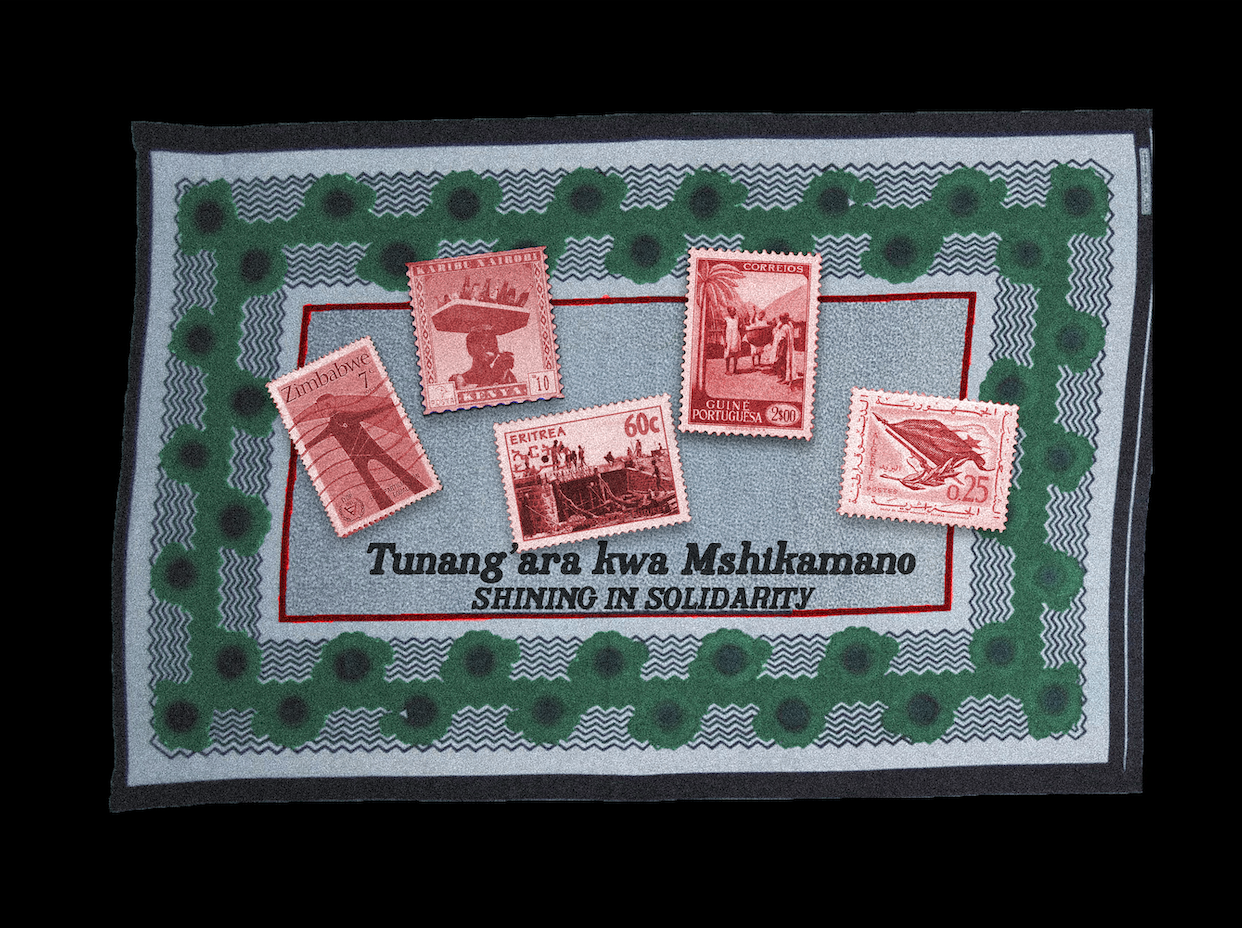
This stripping was not unique to Algeria. Amilcar Cabral conducted population and environmental surveys in conjunction with the revolution in Guinea-Bissau.12 Underground “barefoot doctors” (agar Hakaim) built a clandestine health system in Eritrea.13 “Guerrilla healthcare” was central to Zimbabwe’s liberation struggle.14 Across the continent and across struggles, expertise has been stripped from hegemonic structures and redeployed in the service of liberation.
“We’re not reinventing the wheel,” a representative from MFK told me. “We are just doing what Doctors Without Borders and the Red Cross does but in our own way. It is unabashedly African and political. We refuse to do this if it is not for the movement.” Placing themselves within this lineage, MFK and AMP believed the public health projects they led during the #RejectFinanceBill2024 uprising saw protest epidemiology as a unique part of their history as public health workers on the continent. Not only was this epidemiology as much as any institutional endeavor, but they saw their efforts as a challenge from Africa to Western public health experts and normative ideas of what the field is. Far from apolitical and neutral, the tradition of public health they affiliate with is explicitly for social movements and not any less scientific because of it.
A Different Public Health is Possible
In increasingly fascist conditions, advancing climate catastrophe, and deepening capitalist inequality, many public health professionals advocate for strengthening state and multilateral health systems that are either directly or indirectly enacting violence—preserving their comfortable “neutral” place within the system. The protest epidemiologists of Nairobi point toward a different path. For AMP, MFK, and the other organizations gathered at the People’s Dossier meeting, the stakes were viscerally clear: they could do public health beyond the state, or there would be no record of the dead, maimed, and abducted. In this they give a basis for seeing how public health science can unfold outside the purview of the institutional apparatus it has historically been developed within and remained dependent upon. By taking seriously their claims of doing public health and population science in the chaos of state violence, without institutional support, on the terms of the people they worked with, we open up a rethinking of public health in a world where states are increasingly failing, abandoning, and outright killing the populations they are supposed to protect: that of public health work against and despite the states and supporting apparatuses that have held a monopoly over this science.
While the protests have ended, the residue of these efforts remain. As Saif told me months after the protests ended, they are “waiting for the next one”—the next uprising, the next opportunity opened by a state that cannot stop producing the conditions for its own revolt. In this waiting, the example of what public health can be—grounded in communities, blatantly political, methodologically creative, accountable to protesters rather than funders—is remembered.
What the protest epidemiologists of Nairobi show is that the future of public health need not be controlled by the whims of states or NGO apparatuses. What public health is for and who it belongs to is, “what is best for the movement,” as social justice center health worker Wangui stated at the People’s Dossier meeting, “People are collecting data and stories and documenting the violence. The question is how can we honor their work, this work that is going on and is for the movement?”
In protests, not only are improvised methods of public health one of the only places where this knowledge about state atrocities is created, but they also prefigure practices and networks where public health actors use their skills closer to communities in new ways. In a world of neoliberal gutting of health infrastructures and takeover by fascist governments beholden to capital, this public health might soon be, or perhaps already has become, the only place where public health actors can legitimately care for populations.
—
Daniel Krugman (MSPH) is a Ph.D. Candidate in the Department of Anthropology at Brown University. Supported by the Wenner Gren Foundation for Anthropological Research, he is currently conducting his dissertation research in Nairobi, Kenya on health sovereignty movements and youth protests. @d_krugman
Notes
- Press Statement: STATUS OF FILES FROM IPOA ON GEN Z PROTESTS OF JUNE, 2024. Office of the Director of Public Prosecutions, Nairobi, Kenya, https://odpp.go.ke/wp-content/uploads/2025/07/Press-Statement-on-the-Status-of-Files-from-IPOA-on-Gen-Z-Protests.pdf.
- All personal names in this piece are pseudonyms. All interviews and primary accounts in this piece were recorded by the author as part of research approved by the institutional review board at Brown University.
- Associated Press. “Part of Kenya’s parliament on fire as thousands of protesters enter,” NBC News, June 25, 2024, https://www.nbcnews.com/news/world/kenya-parliament-fire-protesters-rcna158784.
- “Statement on Mukuru Murders and Updates on the Anti-Finance Bill Protests,” Kenya National Commission on Human Rights, July 16, 2024, https://www.knchr.org/Articles/ArtMID/2432/ArticleID/1201/Statement-on-Mukuru-Murders-and-Updates-on-the-Anti-Finance-Bill-Protests.
- Lidigu, Leon, “Finance Bill Protests: One Dead After Being Shot by Police,” Daily Nation, June 22, 2024, https://nation.africa/kenya/news/finance-bill-protests-one-dead-after-being-shot-police-4664534.
- Ogao, Emma, “Kenyan Protesters Clash with Police over Controversial Tax Bill,” ABC News, June 20, 2024, https://abcnews.com/International/kenya-braces-protests-controversial-tax-bill/story?id=111243473.
- Princewell, Nimi and Larry Madow, “Kenya Rocked by Fresh Protests Despite President’s U-Turn over Tax Bill,” CNN, June 27, 2024, https://www.cnn.com/2024/06/27/africa/kenya-rocked-by-fresh-protests-intl.
- Unpublished eyewitness research of the author. Research approved by the Brown University Institutional Review Board.
- Madow, Larry et al., “Kenya’s President Calls Protests ‘Treasonous’ After Police Fire Live Rounds at Demonstrators,” CNN, June 25, 2024, https://www.cnn.com/2024/06/25/africa/kenya-protests-tax-rises-intl.
- Unpublished eyewitness research of the author. Research approved by the Brown University Institutional Review Board.
- Frantz Fanon, A Dying Colonialism (Grove Press, 1965), 89, 142.
- Amilcar Cabral, Unity and Struggle: Speeches and Writings of Amilcar Cabral (NYU Press, 2019).
- Asfaha, Dina Michael, “Medical Sovereignty in Eritrea: Reducing Maternal Mortality and Challenging Global Health Humanitarianism in Africa,” Medical Anthropology Quarterly 38, no. 4 (Winter 2024): 393-406.
- Mavhunga, Clapperton Chakanetsa, “Guerrilla Healthcare Innovation: Creative Resilience in Zimbabwe’s Chimurenga, 1971–1980,” History and Technology 31, no. 3 (Routledge, 2015): 295–323.