
December 4, 2025
The Role of Indigenous Women in Enhancing Food Security and Protecting Ecosystems
By Jecinta Pierra Nyaruai
As many parts of East Africa enter the traditional first rain season of the year, farmers are expressing uncertainty, especially after the flooding that hit Kenya in April 2024.[1] The agricultural economy in Kenya employs 40 percent of the general population and 70 percent of the rural population.[2] Indigenous knowledge systems are reemerging as crucial frameworks for addressing food security challenges and preserving fragile ecosystems, especially due to the erratic weather patterns that are affecting established seasonal crop cycles. These time-tested practices, developed over centuries of careful observation and adaptation, offer sustainable alternatives to conventional agricultural methods that often deplete resources and contribute to environmental degradation.
For Indigenous communities worldwide, knowledge about the environment is not merely academic; it is a basic survival skill. As Monicah Yator, an agro-pastoralist and founder of the Indigenous Women and Girls Initiative (IWGI), explains, “Within our community, we have a deep understanding of water conservation. During recent droughts, these time-tested methods have been essential for ensuring we have at least some harvest when others around us have lost everything.”[3]
In practice, Indigenous science differs fundamentally from Western scientific approaches. While Western science often separates humans from nature and centers on formalized experimental verification, Indigenous knowledge systems view humans as an integral part of ecosystems and build understanding through generations of observation and practice. This holistic approach creates resilient food systems that work with natural processes rather than against or around them. Both systems observe and verify, but through different methodological lenses and relationships with the natural world.
Weather Forecasting by Reading Nature’s Signs
Weather patterns are an important part of rain-fed agriculture. Without proper timing, crop quality and quantity can be affected. One of the most remarkable aspects of Indigenous knowledge is the ability to predict weather patterns through the observation of natural indicators. In many communities, including Yator’s, people “rely on observing nature for weather prediction… the behavior of certain birds, the flowering of specific trees, and even the direction of the wind.” These bioindicators have guided agricultural planning for generations.
The communication of these observations represents a sophisticated form of scientific knowledge transfer that occurs primarily through demonstration, apprenticeship, and oral tradition rather than formal documentation. Community elders observe shifts in patterns and communicate these changes to younger generations through structured teaching moments.
Across Africa, insects serve as important weather forecasters. Termites become notably active before rainfall, cutting grass and collecting food, a signal that humans, perhaps, should gather provisions before the rains come. The behavior of cicadas indicates temperature patterns; their continuous “screaming” during hot weather signals drought conditions, and when they begin to quiet down, it indicates imminent rain.
Large swarms of white butterflies flying from west to east and returning westward signal approaching rainfall. Bee activity also serves as an indicator. If you notice bees building their hives, it suggests that it is about to be a good rainy season, while fewer bees might indicate drought.[4]
Some of these indicators vary by region and ecosystem. What serves as a drought indicator in Tanzania might signal something entirely different in Kenya or Zimbabwe, highlighting how Indigenous knowledge is specifically adapted to local tribes and conditions. As Yator notes, however, “with the changing climate, these indicators are becoming less predictable,” creating new challenges for communities that have traditionally relied on them.
Water Management and Conservation
Indigenous communities have developed sophisticated water management systems adapted to local conditions. Yator describes how her community uses “micro-catchments” or “zai pits”—small depressions strategically placed to harvest rainwater and direct it to crops.[5] These simple but effective techniques have proven invaluable in arid and semi-arid regions where every drop of water matters.
In addition to these catchments, terracing prevents soil erosion in hilly terrain, preserving both soil and water resources. These practices don’t require expensive equipment or external inputs, making them accessible to communities without resources. More importantly, they work with the natural landscape rather than imposing artificial systems that may disrupt ecological balances.
In Baringo County, Kenya, Indigenous women of the Pokot community have refined traditional water harvesting techniques called “korir.”[6] Female farmers dig strategically placed shallow trenches along contour lines of sloped land, reinforcing them with stones and Indigenous drought-resistant grasses. During rainfall events, these structures slow water flow, allowing greater soil absorption and reducing erosion. During the 2022 drought season, a women’s cooperative in the Tangulbei area used these methods and documented an increase in crop yields compared to neighboring plots without water harvesting systems. Women elders teach specific techniques for measuring slope gradients using traditional tools made from local materials, communicating precise engineering knowledge through hands-on demonstration rather than written manuals.[7]
Seed Preservation and Agrobiodiversity
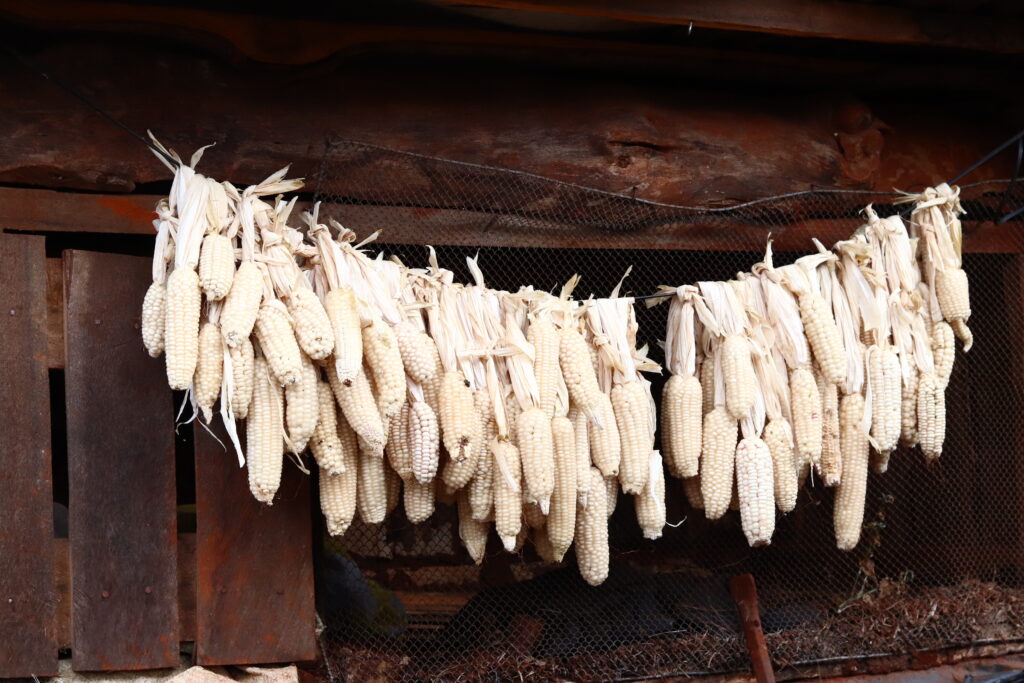
Perhaps one of the most significant contributions of Indigenous farming communities is the preservation of agrobiodiversity through seed saving practices. “We preserve seeds from Indigenous crops by drying them carefully in the sun and storing them in airtight containers, often mixed with specific ash or certain leaves to protect them from pests,” Yator explains. “We also have community seed banks where we share and exchange different seeds.”
In Gilgil, Nakuru County, a collective of women locally maintains a sophisticated seed preservation system for drought-resistant crop varieties. These women have specialized knowledge of over sixty varieties of crops including beans, millet, sorghum, cowpeas, and Indigenous vegetables, each adapted to specific microclimates. Their preservation methods include coating seeds with specific botanical preparations (a mixture of dried and powdered neem leaves, wood ash from particular Indigenous trees, and certain clay soils) that prevent pest infestation without chemical inputs.
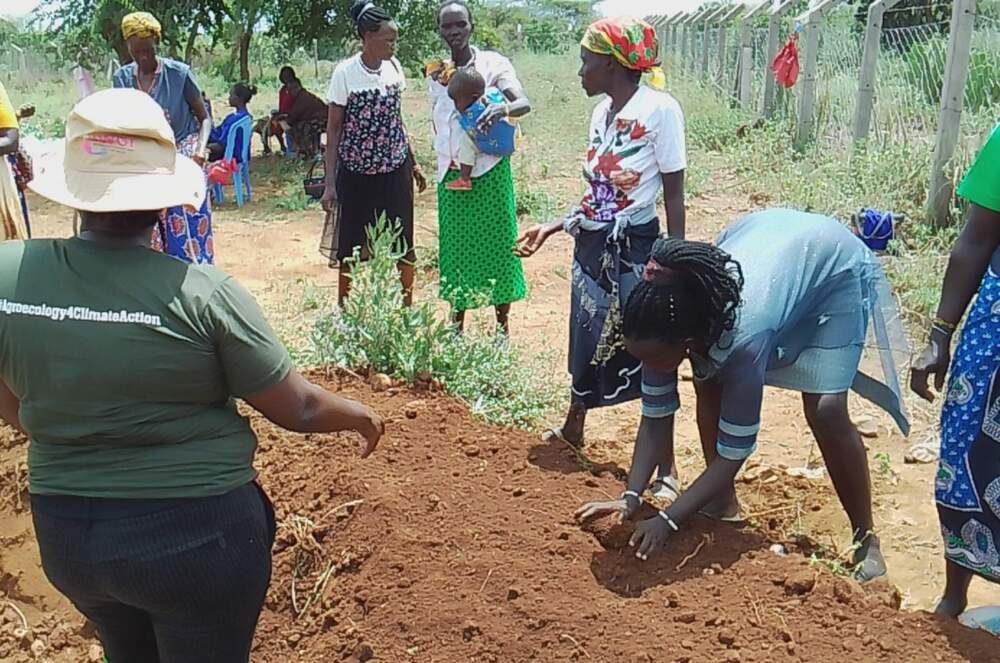
During each harvest, these women select seeds based on complex criteria, including drought resistance, early maturity, pest resistance, and nutritional value. Their communication system includes specialized vocabulary for describing seed characteristics that don’t exist in English or Swahili, requiring distinct preservation of their native language to maintain this knowledge. The seed guardians host seasonal “seed story” sessions where they share the history and properties of each variety with younger women, embedding technical agricultural information within cultural narratives that aid memory retention.[8]
This integration of botanical science with cultural practices represents a form of scientific communication that preserves not just the seeds themselves but the contextual knowledge required to cultivate them successfully. Women document germination rates, growth patterns, and yield data through oral and physical record-keeping systems that have proven accurate when compared with other informal conventional agricultural measurements.[9]
These community seed banks serve as living libraries of local genetic diversity, protecting varieties that have adapted to local conditions over centuries. Unlike commercial seed systems that promote genetic uniformity, Indigenous seed systems celebrate variety as a form of resilience. Different crops and varieties thrive under different conditions, some do better in dry years, others in wet years, some resist certain pests while others tolerate poor soils.
The crops that have proven most resilient during recent droughts in Yator’s community are “drought-resistant varieties of sorghum, millet, and certain types of beans.” These traditional crops, adapted to local conditions through generations of selection, often outperform varieties introduced by seed companies when environmental stresses increase. They represent not just food sources but reservoirs of genetic traits that may become increasingly valuable as climate conditions shift.[10]
Marrying Traditional and Modern Approaches
While these Indigenous communities use a lot of ancient techniques, they are not opposing innovation or rejecting modern technologies. Rather, many are finding ways to integrate traditional wisdom with contemporary approaches. Yator describes how her community is “using weather forecasts (when available and reliable) in conjunction with our traditional observations to make more informed decisions about planting and water management.”
Since 2021, a collaborative initiative between meteorological departments and Indigenous communities in Kenya, Tanzania, and Uganda has created a two-way science communication model that validates both knowledge systems. In the Laikipia region of Kenya, female “community weather translators”—Indigenous women with respected traditional environmental knowledge—receive meteorological data from national weather services, then interpret this information through the lens of local ecological understanding.
These women create integrated forecasts that combine satellite data with traditional observations of plant flowering patterns, animal behavior, and astronomical indicators. During monthly community gatherings, they present these integrated forecasts using local language and cultural frameworks that resonate with farmers. Simultaneously, these women document traditional indicators that prove accurate and share them with meteorological scientists, creating a feedback loop that enriches both knowledge systems. This communication bridge has increased forecast adoption among local farmers and provided valuable ground-truth data to refine scientific climate models.[11]
This approach recognizes that both knowledge systems have strengths and limitations. Indigenous knowledge provides the depth of place-based understanding and integrative perspectives, while Western science offers technological tools and broader data collection capabilities. Together, they can create defined strategies for addressing food security challenges.
Challenges in Knowledge Transmission
Despite their value, Indigenous knowledge systems continue to face issues. As Yator explains, “One of the biggest challenges is that many young people are migrating to urban areas in search of work, and they’re losing touch with these traditional practices.” This generational disconnect threatens the continuity of knowledge that has been passed down for centuries.
The devaluation of Indigenous knowledge in formal education systems compounds this problem. When traditional practices are portrayed as old or unscientific in schools, young people are less likely to see value in learning them. This cultural erosion adds to the loss of practices that could help address ever growing environmental challenges.
Communities like Yator’s are responding by creating intentional spaces for knowledge transmission: “We share Indigenous knowledge with younger women through community workshops, storytelling sessions, and hands-on training on farms. Elders play a crucial role in passing down this knowledge.” These efforts recognize that Indigenous science lives in practice and community.
Indigenous communities need to be seen as “equal partners in the fight against climate change, not just beneficiaries of external interventions.” Their knowledge represents cultural heritage and practical solutions to pressing environmental challenges.
Can We Use Indigenous Knowledge to Enhance Food Security?
As global food systems face increasing pressures from climate change, population growth, and resource degradation, Indigenous knowledge offers both philosophical frameworks and practical techniques for creating more resilient alternatives. The challenge lies not in choosing between traditional and modern approaches but in finding respectful ways to integrate different knowledge systems through effective science communication.
The most successful examples of this integration have established genuine two-way communication channels where Indigenous science and Western science inform each other. This represents science communication at its most inclusive—recognizing that knowledge generation and transmission take different forms across cultures but serve similar purposes. Whether through women’s seed-saving collectives, intergenerational apprenticeship systems, or formal partnerships with research institutions, the key lies in maintaining the integrity of Indigenous knowledge while creating bridges to other knowledge systems.
The effectiveness of Indigenous practices in building food security and protecting ecosystems is not theoretical. In drought-prone regions of Kenya, traditional water harvesting techniques have helped communities maintain food production despite rainfall reductions.[12] In Mexico, the ancient milpa system (interplanting corn, beans, and squash) continues to outperform monoculture approaches in terms of total nutrition per acre and resistance to extreme weather events.
In the Philippines, Indigenous rice terrace systems have functioned sustainably for over 2,000 years, creating not just food production zones but complex ecosystems that support biodiversity while preventing erosion and flooding. These living examples demonstrate that Indigenous knowledge is vital and can be used as contemporary solutions to food security challenges.
Indigenous food systems rarely separate food production from broader ecosystem health. Many traditional practices actively regenerate natural systems rather than depleting them. For example, Indigenous fire management practices in Australia have been shown to increase biodiversity while reducing the risk of catastrophic wildfires.[13] These controlled burns, guided by traditional knowledge of when and where to burn, create mosaic landscapes that support diverse species.
Similarly, Indigenous agroforestry systems in the Amazon incorporate food production into forest management, maintaining ecosystem functions while providing sustenance.[14] These approaches contrast sharply with industrial agriculture’s tendency to simplify ecosystems and reduce them to production units.
As Yator notes, Indigenous knowledge “holds the key to building resilient and sustainable food systems in the face of a changing world.” Understanding this potential requires moving beyond superficial appreciation to looking at ways in which both systems can partner and support each other. Indigenous communities must have the resources and rights to practice and adapt their traditional approaches while accessing beneficial innovations.[15]
The path toward sustainable food security and ecosystem protection may well depend on our ability to learn from those who have maintained healthy relationships with their environments for generations. By valuing Indigenous science not as a relic of the past but as living knowledge essential to our collective future, there is hope for food systems that nourish both people and the planet.
Jecinta Pierra Nyaruai is a farmer and freelance journalist covering food systems with a focus on women’s perspectives. She cultivates indigenous leafy vegetables while also documenting stories of sustainable agriculture, food security, and community resilience. Her work bridges agricultural practice with storytelling across diverse food system topics.
Notes
[1]“Kenya: Floods – Apr 2024,” ReliefWeb, last modified April 2024, https://reliefweb.int/disaster/fl-2024-000045-ken.
[2]“Agriculture Sector Survey of January 2024,” Central Bank of Kenya, last modified February 9, 2024,https://www.centralbank.go.ke/2024/02/09/agriculture-sector-survey-of-january-2024/.
[3]“Adaptation Measures Adopted by Pastoralist Livestock Farmers in Kenya in Response to Climate Change,” Journal of Aquatic and Terrestrial Ecosystems, last modified May 5, 2024, https://blueprintacademicpublishers.com/index.php/JATEMS/article/view/110; Yator, private conversation with the author, February 26, 2025.
[4]Sebata, Sehlapi, et al. “Indigenous Weather Forecast Systems: A Case Study of Weather Forecast Indicators for Chapo Village, Ward 17, in Matopo Zimbabwe,” Journal of Khoisan Studies, 2024. https://doi.org/10.62049/jkncu.v4i2.106.
[5]“Zai Pits in Arid Regions of Kenya,” PlantVillage, last modified January 19, 2022, https://plantvillage.psu.edu/blogposts/139-zai-pits-in-arid-regions-of-kenya.
[6]PS Julius Korir, “I Collect Water from the Rain Which Contributes to 40–50% of My Needs,” YouTube video, 3:00, posted by PS Julius Korir, April 1, 2025, https://youtu.be/wsjvv-7P6_w.
[7]“Tangulbei Women Thrive through Agroecology, Financial Inclusion, and Education,” ActionAid Kenya, https://actionaid-kenya.org/blog/tangulbei-women-thrive-through-agroecology-financial-inclusion-and-education/ (accessed May 30, 2025).
[8]Chironda, Melody. “Kenya: Sowing Seeds of Change on Rocky Land; A Farmer’s Inspiring Journey.” AllAfrica, September 30, 2024,https://allafrica.com/stories/202409300417.html.
[9]Matsa, Winniefridah, and Manuku Mukoni, “Traditional Science of Seed and Crop Yield Preservation: Exploring the Contributions of Women to Indigenous Knowledge Systems in Zimbabwe,” International Journal of Humanities and Social Science 3, no. 4 (February 2013),https://www.ijhssnet.com/journal/index/1618.
[10] Food and Agriculture Organization of the United Nations. Indigenous Peoples’ Food Systems: Insights on Sustainability and Resilience from the Front Line of Climate Change. Rome, 2021. https://www.fao.org/in-action/kore/publications/publications-details/en/c/1414665/
[11]“DARAJA,” Resurgence, last modified April 4, 2024, https://www.resurgence.io/daraja/.
[12]Ifejika Speranza, C., et al. “Indigenous Knowledge Related to Climate Variability and Change: Insights from Droughts in Semi-arid Areas of Former Makueni District, Kenya,” Climatic Change 100, no. 2 (September 2009): 295–315. https://doi.org/10.1007/s10584-009-9713-0.
[13]Macdonald, Maryanne, Darren Garvey, Eyal Gringart, and Ken Hayward, “Fires and Droughts: How Indigenous Knowledge Can Offer Solutions,” World Economic Forum, July 18, 2022, https://www.weforum.org/stories/2022/07/fires-droughts-indigenous-knowledge-solutions/.
[14]Prado, Avener, Ignacio Amigo, and Sam Cowie. “How Agroforestry Can Restore Degraded Lands and Provide Income in the Amazon.” Mongabay, December 9, 2022. https://news.mongabay.com/2022/12/how-agroforestry-can-restore-degraded-lands-and-provide-income-in-the-amazon/.
[15]Arun Agrawal, “Indigenous and Scientific Knowledge: Some Critical Comments,” Indigenous Knowledge and Development Monitor 3 (1995), https://doi.org/10.7454/ai.v0i55.3331.