
Care Without Permission: Insurgent Medicine in Appalachia
By Beau Morgan
Volume 27, no. 3, Public Health
Appalachia is a diverse region of the United States stretching from southern New York to northern Alabama and Mississippi, with the south central and central subregions—including East Tennessee, eastern Kentucky, southern West Virginia, and western North Carolina—experiencing some of the most severe health inequities in the country.1 These inequities are the result of long histories of extraction, regional abandonment, and state violence.2 From coal company domination and environmental devastation to uprisings like the Coal Creek War, the region has been shaped by ongoing struggle between communities and the carceral forces that exploit their labor, land, and lives. Today, that struggle persists within regional healthcare systems that function as sites of surveillance, exclusion, and punishment by restricting reproductive care, criminalizing people who use drugs, and dismantling access to gender-affirming care.
I am writing this essay as a harm reductionist and paramedic working in Southern Appalachia and as a person embedded within communities most impacted by barriers to care. For over a decade I have provided care alongside unhoused communities, people who use drugs, and trans patients navigating hostile medical systems. I have witnessed people be denied necessary medications and surgical interventions, forced into abstinence-based treatment, and refused care altogether. In response to this oppression, communities across the region are building alternatives rooted in longstanding traditions of resistance and mutual aid. Insurgent medicine in Appalachia is born out of direct confrontations with a carceral healthcare system. It embodies autonomous, community-led care that refuses institutional control and sustains community survival across life experiences including drug use, reproductive health, and gender affirmation.
Care as Carcerality in Appalachia
Clinical settings become unsafe through the pathologizing of marginalized identities and bodies, carceral systems of “compliance,” the exclusion of community health knowledge, and a refusal to acknowledge the social drivers of health. Institutionalized ideals of white supremacist patriarchy drive marginalized communities to rely on informal care networks or forego care altogether. Groups and individuals practicing insurgent forms of medicine are often aligned and grounded by principles of bodily autonomy and self-determination; simultaneously, they engage with collective histories of care, broad political landscapes of liberation, and the social drivers of health such as built environments and the impacts of poverty. These autonomous groups work to prioritize those impacted by the deep entrenchment of carcerality within the U.S. healthcare system that functions as a site of enclosure, punitive neglect, and medical abandonment. As a scholar of comparative U.S. ethnic studies, Dr. Ruby Tapia argues that the objectives of the carceral state expand far beyond formal forms of incarceration, such as state and federal prisons, local jails, immigrant and juvenile detention centers, military prisons, and carceral programs of probation and parole.3 Expanding our understanding of carcerality allows us to examine how healthcare systems operate by way of control, surveillance, and conditional care, where access to treatment is mediated by assessments of compliance, risk, and worthiness. As abolitionist health frameworks have further shown, these systems fail marginalized communities and actively produce harm through practices of exclusion, gatekeeping, and the rationing of care. Healthcare settings become sites where autonomy is restricted, medications are withheld or removed, and patients are disciplined through both clinical and administrative mechanisms by reinforcing broader systems of punishment and abandonment that extend beyond the walls of traditional carceral institutions. Carceral systems and the denial of healthcare create an underclass that is continuously impacted by cycles of punishment, austerity, and imprisonment. These systems not only operate within prisons, but are also reproduced in clinical settings through the regulation of who is deserving of care, under what conditions, and at what cost.
Regional first hand accounts I have received of institutionalized medical violence include numerous occasions where local sexual assault centers have refused to provide post-exposure prophylaxis (PEP), a short course of HIV medicines taken after a possible exposure to prevent HIV infection, after gay men and trans individuals were raped. This care was withheld as a form of moral judgment, where protection from HIV becomes contingent on perceived legitimacy and worthiness. While working as a paramedic I have witnessed HIV medications being confiscated by hospital security in an emergency room setting–an act that reflects the convergence of healthcare and policing and extends institutional authority beyond denial of care into the active removal of life-sustaining treatment. My colleagues and I have heard firsthand accounts of trans women being humiliated and openly mocked by nursing staff while being treated for post-surgical complications and hemorrhage. This egregious mistreatment reflects interpersonal harm and the enforcement of social control that marks certain bodies as outside the bounds of dignified care. Trans minors and adults being refused gender-affirming care, surgeries, and hormone therapy demonstrates how access to medically necessary treatment is restricted through gatekeeping practices that function as punishment and exclusion. Trans folks experiencing blatant discrimination in clinical settings are made to navigate systems that surveil and discipline rather than heal. People who use drugs being denied urgent surgical procedures, resulting in their death, illustrates how care is rationed along moral lines, where survival itself becomes conditional. Pharmacists refusing to fill prescriptions for medication-assisted treatment such as buprenorphine, fill testosterone and estrogen prescriptions, or provide injection supplies further entrench this system of control by limiting access to life-sustaining medications. People who use drugs having their signatures forged by nurses to indicate that they have left higher levels of care against medical advice reveals how institutional documentation can be manipulated to shift blame onto patients, reinforcing narratives of noncompliance and justifying future denial of care. Taken together, these practices function collectively to discipline, exclude, and produce a population that is systematically denied autonomy and full access to healthcare.
An Insurgent Response
Insurgent medicine is a collective response to the systemic neglect of oppressed communities, providing preventive, routine, and acute healthcare services delivered by community members outside of formal clinical settings. This insurgency is intersectional with BIPOC, Two Spirit, queer, transgender, undocumented, disabled, and mad individuals—as well as youth, those experiencing homelessness, and people who use drugs—in a fight to access healthcare. Direct collective action via insurgent medicine can move us beyond performative calls for policy change that oftentimes materially accomplish very little. In contrast to passive tactics such as sanctioned marches and protests, insurgent medicine is a direct intervention of care. Providing and making gender-affirming hormone therapy medications and supporting pregnancy termination are examples of directly meeting people where they are to provide health access regardless of criminalization or policy change. Insurgent medicine makes sure that people are able to access the care they need without appealing to State power and without asking permission from carceral institutions.
Insurgent medicine is grounded by the framework of Makeshift Medicine and exists not to fill the intentional gaps where patients fall through the cracks, but rather exists as the foundation of a non-carceral system of care. “Makeshift medicine is a response to healthcare access barriers that force people into the margins of the formalized healthcare system.”4 This is medical care provided by and for all those who are stigmatized, dismissed, and criminalized. The intentional voids of care found throughout Appalachia are devastating, yet insurgent medicine serves as a collective response against erasure.
Within the United States we have seen examples of revolutionary action in healthcare through the Young Lords’ takeover of Lincoln Hospital, the Black Panther Party’s Free Breakfast for Children Program and community health clinics, the Chicago-based Jane Collective’s provision of radical reproductive healthcare, and the Street Transvestite Action Revolutionaries (STAR) co-founded by Marsha P. Johnson and Sylvia Rivera to protect and support unhoused transgender, intersex, and gender non-conforming people. Marginalized communities know how to come together and build lasting networks of care because they have not been stripped of their ability to imagine another world where community members thrive.5 Within a system where entire populations are criminalized, institutions are granted increasing power to decide who is “deserving” of care and who is disposable. Within this context it is important to understand insurgent medicine as belonging to historical and futuristic timelines of integrated political and militant struggles for access to healthcare. An example of a militant struggle for healthcare access could be actions taken to ensure that community members are able to safely access reproductive healthcare. It is not uncommon in Appalachia for armed anti-abortion extremists to surround and try to forcibly enter clinics while harassing community members seeking care. Engaging in militant struggles can look like preventing anti-abortion extremists from delaying abortion care for those who seek it. Can you explain what you are advocating here, pros and cons?
Building an Insurgency of Care in Appalachia
In Appalachia in particular, people seeking reproductive healthcare, people who use drugs, and trans people are being systematically pushed out of formal healthcare. As an example from 2025, Tennessee passed the Medical Ethics Defense Act (SB 955), a law that allows healthcare providers to refuse to participate in certain medical procedures or treatments based on their moral, ethical, or religious beliefs.6 In two incidents since the passing of SB 995, an OB-GYN in Tennessee refused care to a pregnant woman because she was “unwed,” and another refused to provide a sterilization procedure for a consenting adult to “protect her sacred fertility.”7 Insurgent medicine has emerged as a necessary, community-built system of survival and liberatory care. Within the Southern and Central Appalachian region of the U.S. specifically, individuals and collective networks have been able to create and sustain a landscape of care models that meet the often complex healthcare needs of community members.
Appalachia has some of the most restrictive abortion bans in the country.8 For those who prefer clinical management, where professional healthcare providers manage care, many Appalachians must rely on formal and informal abortion funds like Mountain Access Brigade and Kentucky Health Justice who work to make abortion care accessible through material support for out-of-state travel, child care expenses, food, and lodging.
For others, self-managing pregnancy termination outside of the clinical setting is a priority that can facilitate increased safety, autonomy, and community self-determination. Community knowledge exchanges have facilitated spaces where communities learn to manage their own abortions with mifepristone and misoprostol and sometimes misoprostol alone, in line with the World Health Organization guidelines for self-managed abortion.9 Autonomous groups have been able to provide access to medications, ultrasounds, supportive care, emergency contraceptives, and health education. Community- based abortion providers have been able to provide care at the margins to sex workers, undocumented immigrants, refugees, and people who use drugs. It is important to note that throughout our region, children in particular are stripped of all bodily autonomy. Carceral systems like foster care, the juvenile “justice” system, curfews, corporeal punishment and surveillance in schools and child penal institutions, and the legality of child marriage lead to abysmal health outcomes and a denial of youth autonomy.10 Due to the extreme barriers to accessing out-of-state care, we have witnessed children living in Appalachia, and specifically in Tennessee, be forced to give birth, even when the pregnancy resulted from sexual assault.11 We have witnessed the preventable deaths of pregnant people in need of emergency abortion care while legislators refuse to listen to those most impacted by bans on reproductive health.
Throughout Appalachia, people suspected of intravenous drug use are asked to sign an “IV Drug Use Associated Infection Plan of Care” that disallows them any visitors or outside contact during their hospital stay and requires three months of mandatory inpatient substance-use treatment for some procedures.12 Recently a woman reported to me that she had an ankle monitor placed on her and was locked in a room for over twenty-four hours without access to food or water while detoxing. I have watched friends and patients die because of how badly they were treated in higher-care settings. Recently a close friend was coercively discharged from a hospital with a collapsed lung secondary to pneumocystis pneumonia, a severe opportunistic infection. They were provided no meaningful way to access the needed medications; they were dead within a week.
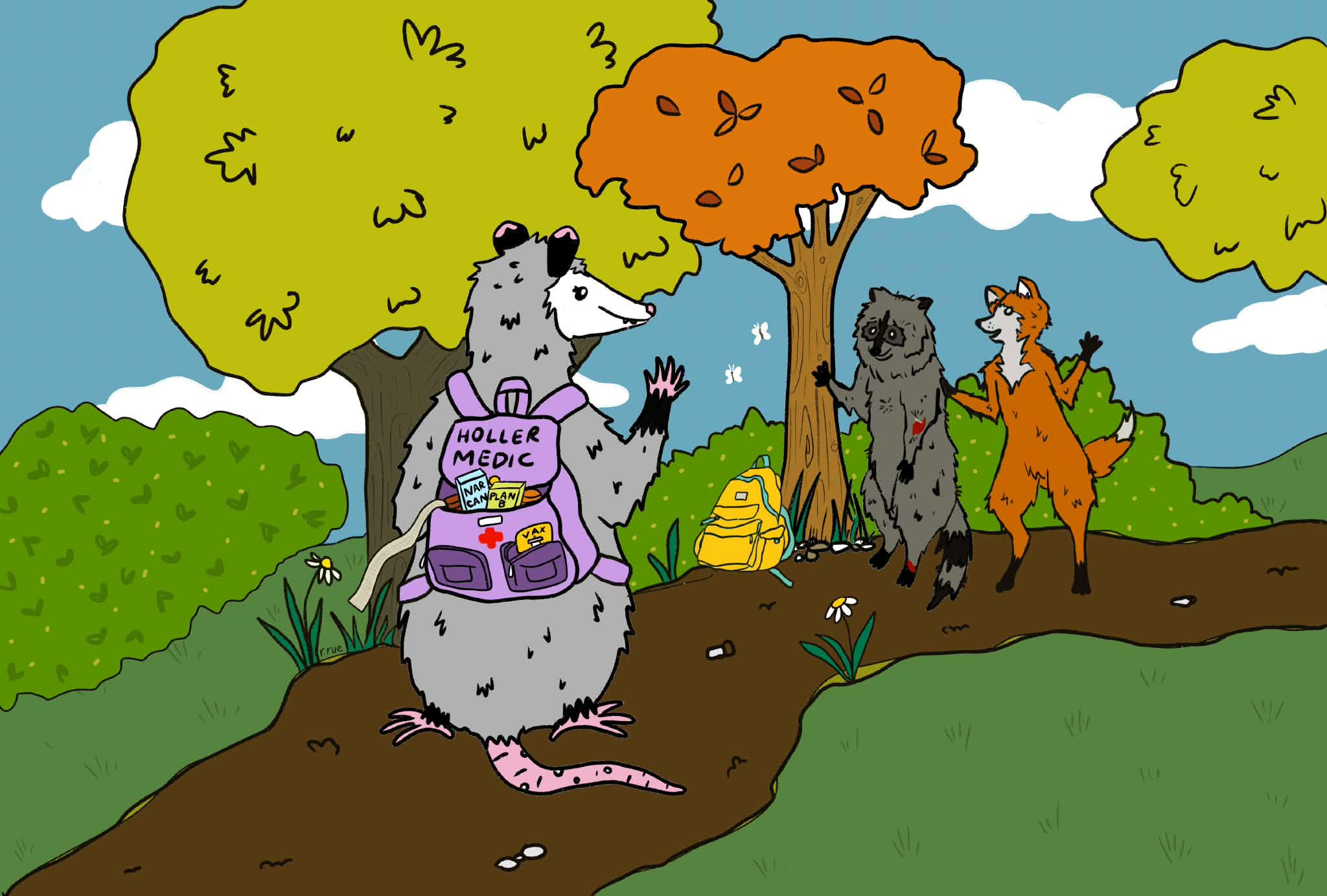
Autonomous harm reduction crews, led by people who use drugs, have made a material impact in many ways: providing compassionate overdose response training; distributing naloxone, an opiate overdose antidote; providing safer injection, smoking, and snorting supplies; and providing fentanyl, xylazine, and medetomidine test strips. These crews reach out directly to people who use drugs while prioritizing populations that face barriers in accessing more formal institution-led harm reduction models such as syringe service programs. Along with basic supplies, members of various street medicine formations are also able to provide extensive wound care, fluid resuscitation, overdose response, vaccinations, antibiotics, and HIV/HCV testing to community members. People I love who use drugs have described their hospitalizations as an “imprisonment.”
For many in the LGBTQ+ and specifically the trans community, part of the trans experience is becoming an expert in community-based emergency response, autonomous self-organizing, and solidarity resource allocation. LGBTQ+ healthcare within the setting of carceral institutions creates barriers to access. Many LGBTQ+ people are required to obtain multiple psychological assessments, navigate age and mental health restrictions, and undergo “gender reassignment precertification.”13 Again we see how carceral institutions within healthcare enforce criminalization.
I reached out to a few folks providing gender-affirming care outside of clinical settings to people who have lost access to formal systems of care or who felt safer outside of clinical settings, asking about their experiences in the face of increasing criminalization.
One anonymous caregiver wrote back:
“As gender-affirming care is increasingly restricted and criminalized, we’ve seen a lot of fear and uncertainty from our friends and loved ones, including those of us personally involved in this community-based estradiol distro (distribution) project. We’ve also seen a big uptick in community engagement with projects like ours.
While we do worry that our work will be targeted, at the end of the day, we must take care of each other, and we will continue to make DIY estradiol injectables freely available to our communities in the amounts that we can. We know we can only fill a small gap of care, but we owe it to our communities to continue doing so.”
Insurgent Medicine as a Path Forward
When community care workers engage in the practice of insurgent medicine, marginalized communities are at lower risk of being impacted by carceral systems of care. In Appalachia and beyond, harm reduction organizations, street medicine teams, and community-led clinics are already building alternatives by providing wound care, distributing medications, offering hormone access, and meeting people where they are without requiring compliance, abstinence, or proof of worthiness. These models reject the carceral system and instead center survival, dignity, and autonomy. Joy can be found in community-led initiatives that decrease barriers to access and provide alternatives to formal clinical settings because they meet immediate needs and actively demonstrate that another world of care is possible. Our imaginations are strong and our will to survive is even stronger. We can meet the needs of our communities with systems of care that are low-barrier, non-coercive, and accountable to the people they serve while reimagining and implementing a healthcare system that cares for all people.
—
Beau Morgan (EMT-P, NRP) is a paramedic, harm reductionist, and street medicine practitioner in Central Appalachia. Beau is currently pursuing their MD so they can continue providing care as a rural family medicine physician. IG: @bmorgan865
Notes
- “Appalachian Region Endures Dramatic Health Challenges Compared with Nation, New Research Shows,” Appalachian Regional Commission, published August 24, 2017, https://www.arc.gov/news/appalachian-region-endures-dramatic-health-challenges-compared-with-nation-new-research-shows/.
- Grace Simpson, “Policing impacts on racial and regional oppression in Appalachia,” Theses, Dissertations and Capstones, 2024, https://mds.marshall.edu/etd/1880/.
- Ruby C. Tapia, chair, “What Is the Carceral State?” (panel discussion at the Carceral State Project Symposium, University of Michigan, Ann Arbor, October 3, 2018).
- P. J. A. Kelly, K. B. Biello, and J. M. W. Hughto, “Makeshift Medicine Is a Response to US Health System Failures,” Nature Human Behaviour 7 (2023): 475–477, https://doi.org/10.1038/s41562-023-01575-z.
- Lauren Lefty, “For the People’s Health: Lessons from the Young Lords for Today’s New York,” Museum of the City of New York, March 2, 2021, https://www.mcny.org/story/peoples-health-lessons-young-lords-todays-new-york; Diane Pien, “Black Panther Party’s Free Breakfast Program (1969–1980),” BlackPast.org, February 11, 2010, https://www.blackpast.org/african-american-history/black-panther-partys-free-breakfast-program-1969-1980/; C. R. King, “Calling Jane: The Life and Death of a Women’s Illegal Abortion Service,” Women & Health 20, no. 3 (1993): 75–93, https://doi.org/10.1300/J013v20n03_05; Kelsey Hall, “Gay Power Is Trans History: Street Transvestite Action Revolutionaries,” New-York Historical Society, June 10, 2020, https://www.nyhistory.org/blogs/gay-power-is-trans-history-street-transvestite-action-revolutionaries.
- Tennessee General Assembly, SB0955 (114th General Assembly): Medical Ethics Defense Act, enacted April 29, 2025, https://wapp.capitol.tn.gov/apps/BillInfo/Default?BillNumber=SB0955&ga=114.
- Jessica Levitz, “A Woman Says She Was Denied Prenatal Care for Being Unmarried Under a New Tennessee Law. Here’s What to Know About It,” Time, July 28, 2025.
- Amie M Ashcraft et al., “Rural Appalachian Women Will Suffer Disproportionately if Attempts to Further Restrict Emergency Contraception Are Successfu.,” PubMed 5, no. 1 (January 1, 2023): 6–21, https://doi.org/10.12023/jah.0501.02.
- World Health Organization, Abortion Care Guideline (Geneva: World Health Organization, 2022), https://www.who.int/publications/i/item/9789240039483.
- Human Rights Watch, “US States Fail to Protect Children’s Rights,” September 13, 2022, https://www.hrw.org/news/2022/09/13/us-states-fail-protect-childrens-rights.
- Center for Reproductive Rights, “Abortion Laws by State: Tennessee,” ReproductiveRights.org (state law map and overview), accessed March 30, 2026, https://reproductiverights.org/maps/abortion-laws-by-state/tennessee/.
- Lauren Davis, “UT Medical Center Changes Care Plans for IV Drug Users,” WVLT.com, August 15, 2017.
- BlueCross BlueShield of Tennessee, “Gender Reassignment Surgery,” accessed March 30, 2026, https://www.bcbst.com/mpmanual/gender_reassignment.htm.