

To make OIST into an institution that truly values all its workers and serves Okinawa, radical reforms are needed. To achieve them, scientists must dismantle their own positions as a detached elite, earning wider public support and...

To make OIST into an institution that truly values all its workers and serves Okinawa, radical reforms are needed. To achieve them, scientists must dismantle their own positions as a detached elite, earning wider public support and...

Drawing on lessons from the US-Mexico Corn War, we examine how the political economy of knowledge—or rather the ways in which history and society mold the material foundations of the production of knowledge—shapes global agricultural...

The partnership between the UNHCR, the UN World Food Programme (WFP), and the biometric firm IrisGuard, exemplifies technocolonialism. IrisGuard’s technological innovation is being fueled by the exploitation of refugees and forcibly...

The crises of recent years, particularly with the shocks of the pandemic and climate breakdown, have highlighted problems that cannot be solved within existing parameters and exposed the inadequacies of other intellectual alternatives. So...
Universities promoting Open Science operate in a clear contradiction; they call for global knowledge sharing while funding the destruction of knowledge systems in the Global South.
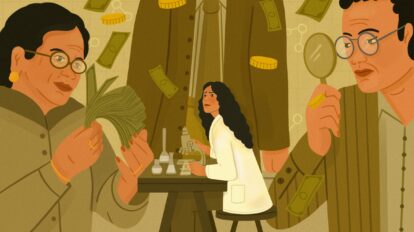
Now more than ever there is a need to understand science, data, and knowledge as products of historically contingent political and economic interests and arrangements.
The shortcomings of how society currently organizes science are plain to see. The solution is more elusive. To chart our way forward, we must first understand how knowledge is produced under capitalism.
Scientific publishing functions less as a service to science and more as a feudal rent extraction system. Publishers act as gatekeepers of recognition and career advancement, while universities and funding bodies reinforce the dynamic by...
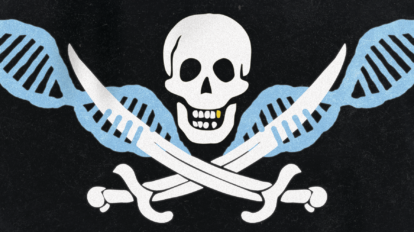
Ending biopiracy requires more than financial redistribution. It requires legal and epistemic justice, i.e., implementing prior informed consent, enforcing traceability for DSI, and ensuring that communities themselves govern access to...
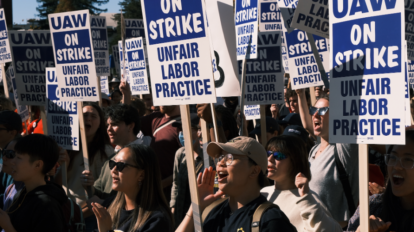
The recent and explosive wave of unionization drives demonstrates that the scientific workforce is recognizing its collective power. The strategic advantage of scientific labor—its inherently collaborative and interdependent nature—is...

According to UMaine’s Office of Research Administration, in just the past decade, DoD investment at the university has shot up 700 percent—up from ~$8,200,000 in FY 2017 to nearly $66,000,000 in FY 2025. The University of Maine is an...

Today, data centers, AI research platforms, and education technologies continue to capture the collective intelligence of researchers, teachers, and students, transforming our cooperation into proprietary infrastructure. AI’s progress is...

In an age where Big Tech appears to come up with new ingenious methods for oppressing people, distrust of all forms of technology is a natural reaction. However, are we condemned to wear chains which we forged ourselves? Or can we build...
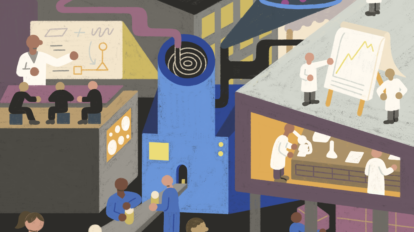
Science plays a central role as it generates the knowledge needed for technical changes. It is not simply a tool at the service of individual capitals, but an enabler of the global process of capital accumulation.
We put out Call for Proposals for print or special issues frequently. Sign up to our newsletter for updates. Please also visit our special issue pages as some may be accepting articles on a rolling basis. Contributor Fees $250: Feature...
Our magazine is run exclusively by volunteers. We devote our labor solely for the pursuit of a science and a society free from the shackles of capital! In keeping with our values, our magazine makes all of our content free and accessible...
Since 2014, activists across the United States and in Mexico have rebuilt the organization, which now has about a dozen active local chapters and numerous working groups that bring people in different locations together to work on specific...